Things to Do in the Ourika Valley: An Honest List from a Local
 By Khalid, local Amazigh guide11 min read
Things to do in the Ourika Valley, honestly: waterfalls, village and cave hikes, the Monday souk, and what to skip (camel stops, argan shops). Come and visit.
The best things to do in the Ourika Valley are simple: walk to the Setti Fatma waterfalls, hike up to the quiet Berber villages, drink mint tea in a family home and, if it's a Monday, shop at the souk in Tnine Ourika. I was born in this valley, so this is my honest list, including the things I'd skip and why.
Quick answer: The Ourika Valley starts about 30 km from Marrakech, and Setti Fatma, at the end of the road, is about 60–65 km away (1 to 1.5 hours by car). There is no entrance fee for the valley. Give it a full day if you want a real hike and a slow lunch.
The Ourika Valley in 60 seconds
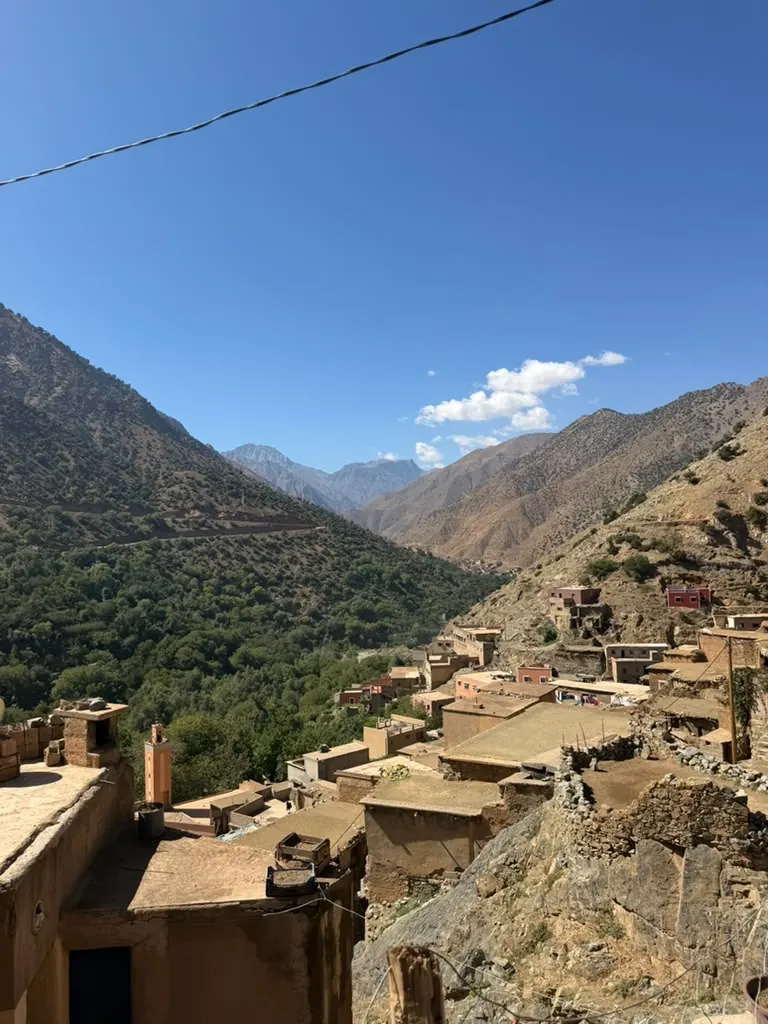
Think of one road and one river. The road leaves Marrakech going south-east across the flat red plain, and after about 30 km the mountains close in. You pass Tnine Ourika, the market town, then Aghbalou, where cafés line the river. The asphalt ends at Setti Fatma, at roughly 1,500 metres.
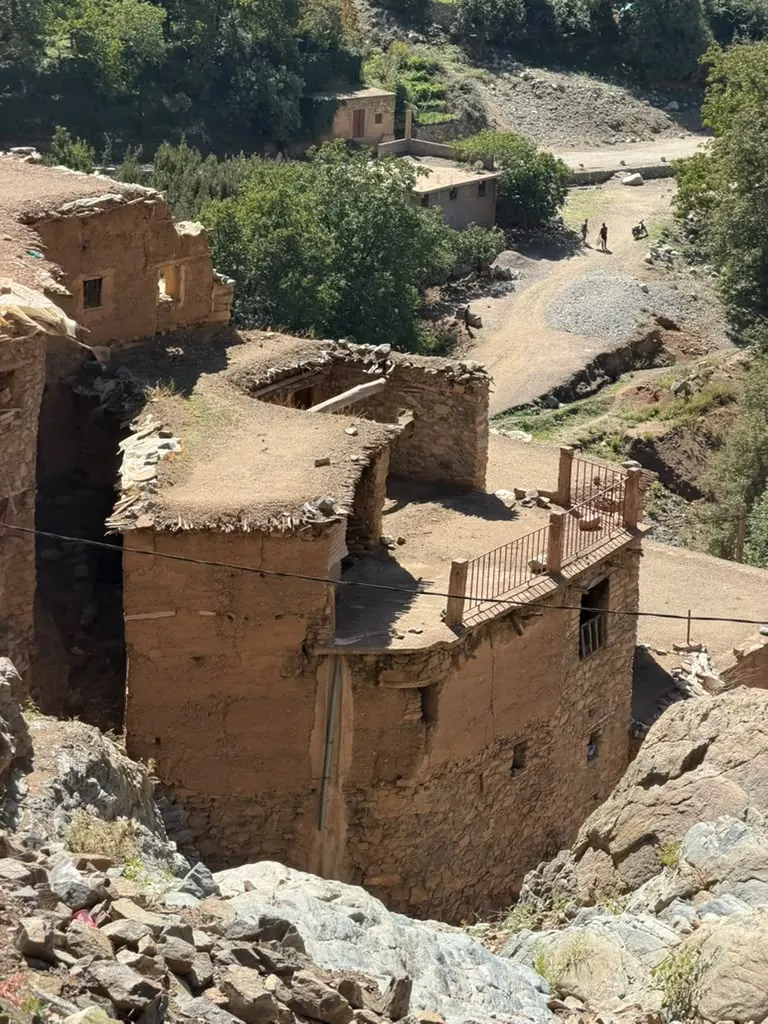
The people here are Amazigh, the name we use for ourselves; outsiders often say Berber. Most families speak Tashelhit at home, farm small terraces watered by old irrigation channels called seguias, and build their houses of earth and stone.
Is there an entrance fee for the Ourika Valley?
No. There is no gate or ticket for the valley. Driving up is free, and so is walking to the first waterfall at Setti Fatma. You pay for small things: a parking attendant may ask for a small fee at Setti Fatma (agree it before you leave the car), a guide if you want one, your lunch, and private places like the Anima garden. On my hikes, the price includes drinking water; everything else, like lunch, transport and any small entry fees on the way, you pay yourself.
Things to do in the Ourika Valley at a glance
Here is what to see in the Ourika Valley, and what I really think of each.
| What | Where | Time | My honest verdict |
|---|---|---|---|
| Setti Fatma waterfalls | End of the road | 1–3 hours | Worth it. Go early. |
| Village and cave hike | Upper valley | 5 hours | My favourite day |
| Quieter waterfalls | Back paths | About 4 hours | Worth it |
| Tea and tagine with a family | A village home | About 3 hours | Worth it |
| Monday souk | Tnine Ourika | 1–2 hours | Worth it, on Mondays |
| Ecomusée Berbère | Tafza, near Tnine | About 1 hour | Worth it if you like stories |
| Anima garden | Near the valley mouth | 1.5–2 hours | Pretty, but not the mountains |
| Oukaïmeden | Side road, about 2,600 m | Half a day | For snow or old carvings |
| Camel photo stop | Roadside | 15 minutes | Skip |
| Argan shop | Roadside | 30 minutes | Skip, or shop with open eyes |
See the Setti Fatma waterfalls, and know where to stop
Everyone comes for the Setti Fatma waterfalls, and they are right to. There are seven cascades. The first and biggest is a steep walk of about 20 minutes from the village, over rocks and past little cafés. Follow the blue arrows painted on the rocks. You don't need a guide for this part. Honestly.
After the first fall, the path becomes a climb over rocks and loose ground, and the highest fall is about another hour up. Here a guide makes sense. Use the official guides' office on the main street, not the man who appears next to you at the bridge.
Go early: by late morning on weekends and in summer, the path fills up. My full trail guide is in my post on the Setti Fatma waterfalls.
Do it with me: Full Day from Marrakech · Message me on WhatsApp
Hike the quiet side: Berber villages, goats, dry hills and a cave full of bats
This is the Ourika most visitors never see, and my favourite of all the Ourika Valley activities: dirt paths, goats, villagers going about their day, and nobody selling anything.
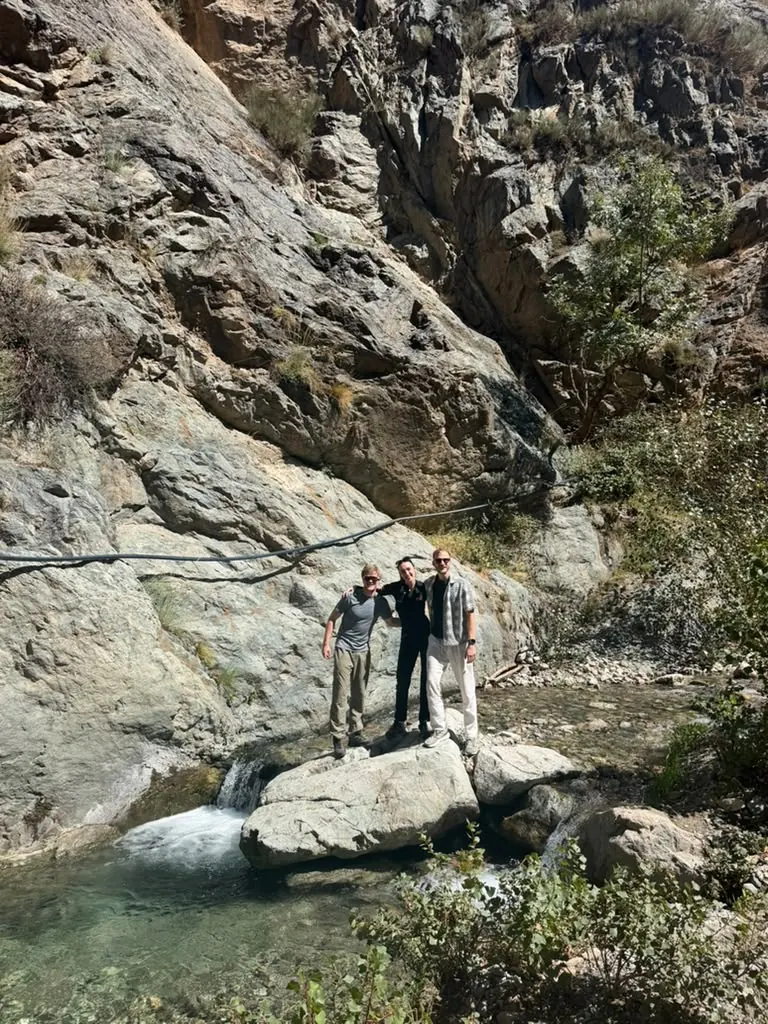
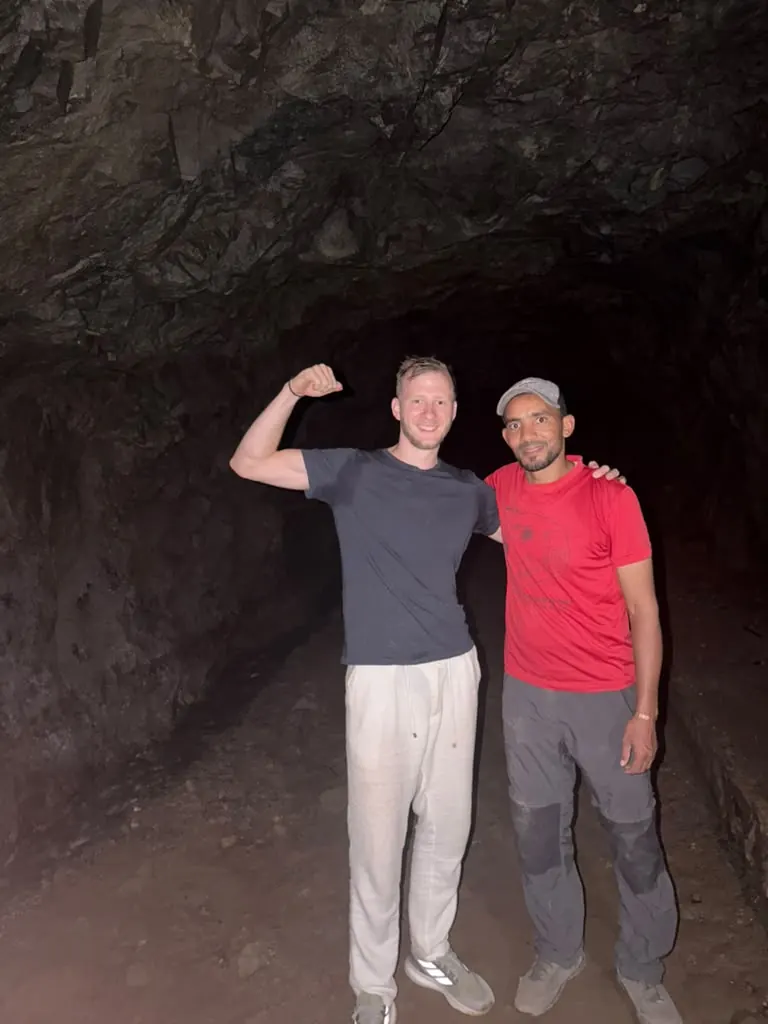
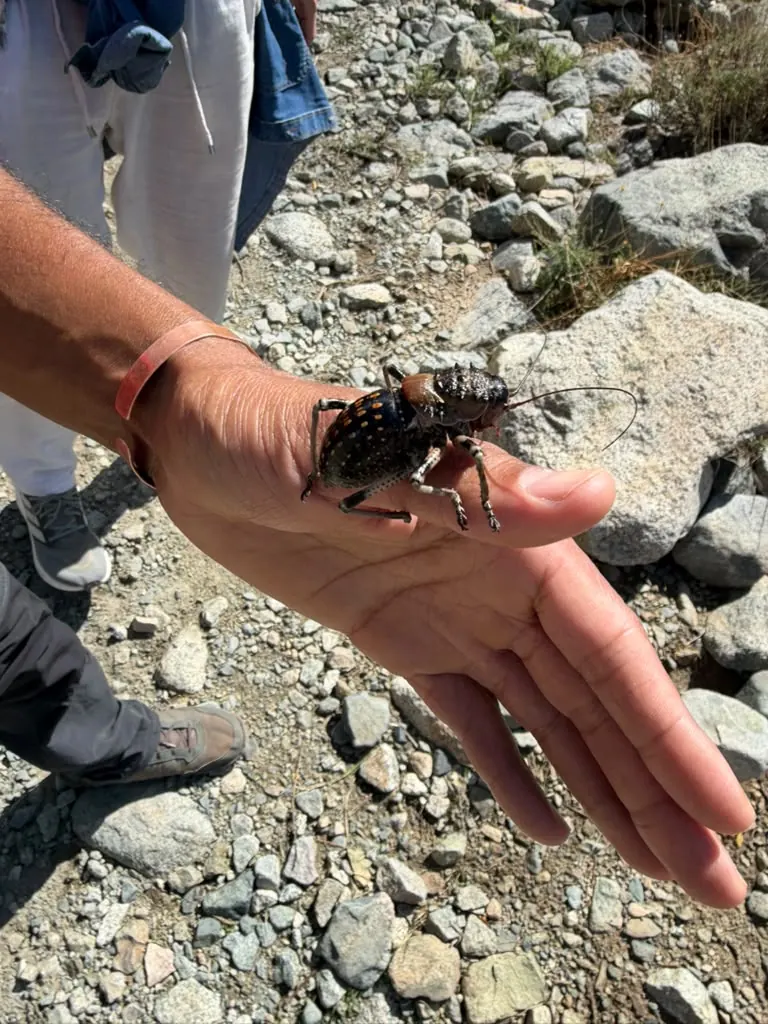
My Villages, Caves & Waterfalls hike takes about 5 hours and is moderate. We meet at the bridge near the Maison du Meunier Berbère, the Berber miller's house (see it on the map). We walk through the valley to a Berber village, then climb into dry hills that look more like desert than mountain. Then comes the cave, with bats and some very large beetles. We come down by the waterfalls and finish back at the miller's house.
A recent group did this walk in October 2026. We met goats and villagers, crossed those desert-like hills, and found a bat in the cave and some giant beetles. Yes, people held them. We laughed most of the way.
Expect village paths, dirt trails, rocky parts and a short scramble at the cave. My hikes are between 5 and 15 km, depending on the route we choose. For routes, difficulty and maps, read Ourika Valley hikes.
Do it with me: Villages, Caves & Waterfalls · Message me on WhatsApp
Find a waterfall without the crowds
Setti Fatma is not the only water in this valley. Side streams come down from the mountains, and some have small cascades that tour buses never reach. My Hidden Waterfalls walk takes about 4 hours on back paths to quieter falls. Ask me on WhatsApp which falls have the most water when you come.
One honest note: the water is strongest in spring, when the snow melts. By late summer, small falls can shrink to a trickle. If waterfalls are your main reason to come, ask me about the month first.
Do it with me: Hidden Waterfalls · Message me on WhatsApp
Mint tea and tagine in a family home
You can eat tagine at any café by the river. Eating it on a carpet in a village home, with a family, is something else. The tea comes fast, lunch comes slowly, and nobody looks at their phone.
My Tea & Tagine at Home visit is about 3 hours and easy. If you are vegetarian or have allergies, tell me on WhatsApp before the day.
A few manners help. Take off your shoes before you step on the carpets. Accept at least one glass of tea. Ask before you take photos of people. Fun fact: mint tea feels ancient here, but green tea only reached Morocco with British trade in the 18th and 19th centuries.
To see what a real village visit looks like, and how to spot a staged one, read my guide to a Berber village tour from Marrakech.
Do it with me: Tea & Tagine at Home · Message me on WhatsApp
Shop like a local at the Monday souk in Tnine Ourika
Tnine means Monday. The town of Tnine Ourika is named after its market day. Every Monday, farmers and traders from the villages around fill the Tnine Ourika souk with vegetables, fruit, herbs, spices, olive oil, nuts, dates, bread and sweets. It's a working market, not a show for tourists. That's why I like it.
- Go in the morning. You may still see sellers arriving with their baskets on a donkey.
- Bring small notes and coins. Nobody wants to change a 200 MAD note for a bag of mint.
- Ask before taking photos of people, especially older people. Some will say no, and that's their right.
If you visit on a Monday, ask me about starting at the souk and then walking.
Do it with me: any of my tours on a Monday · Message me on WhatsApp
Learn the valley's story
The Ecomusée Berbère in Tafza
About 4 km from Tnine Ourika, a small sign points the way to the village of Tafza. There, an old three-storey house of mud brick is now the Ecomusée Berbère, a small museum linked to the Maison de la Photographie in Marrakech. Inside are pottery, carpets, the silver jewellery of women's dowries, and photographs of Atlas life from the 1920s. Give it about an hour. Opening hours can change, so check before you go.
The Maison du Meunier Berbère
The Berber miller's house is where my village hike starts and ends. Ask me on WhatsApp if you want to know more before you come.
A short history of the Ourika Valley
The valley in five dates
- 9th century: the geographer al-Yaqubi praises the fertile land along the Ourika River.
- 1058: the Almoravids capture Aghmat, near the mouth of the valley (old texts call it Aghmat Wurika). It was their first capital, before they founded Marrakech around 1070. Archaeologists have found its mosque, a palace and the largest medieval hammam yet found in Morocco. Al-Mu'tamid, the poet-king of Seville, died there in exile and is buried there.
- 1312: a book of Berber family histories lists the Warika (Ourika) tribe, who gave the valley its name, among the Masmuda tribes of the High Atlas.
- 17 August 1995: a sudden storm sends a flash flood down the river. More than 200 people are left dead or missing.
- 2011: Amazigh becomes an official language of Morocco. Look for the Tifinagh letters on road signs.
Do it with me: Villages, Caves & Waterfalls starts at the miller's house · Message me on WhatsApp
Gardens and saffron
Anima garden. The Austrian artist André Heller made this garden of plants and sculptures on dry land near the start of the valley, about 28 km from Marrakech. In October 2026 the official site listed: open daily 9:00 to 18:00 (closed for the Eid holidays), 140 MAD for adults, 60 MAD for ages 12 to 16, free under 12, and a free shuttle from the Marrakech medina (book a seat ahead). My honest view: it's calm and lovely, but it's a garden, not the mountains. Do it on the way home.
Ourika Valley saffron. You may hear that saffron is an "old Ourika tradition". The truth is that it's new here. A women's cooperative in Aboghlo, in Ourika commune, started in 2016 and began growing saffron in 2019. The purple flowers are harvested from about late October to mid-November, very early in the morning. If you are here then, it's beautiful to see. Ask me on WhatsApp if you want to see it.
Go higher: Oukaïmeden's snow and ancient rock carvings
Near Aghbalou, a side road climbs to Oukaïmeden, a high plateau at about 2,600 metres, around 70 km from Marrakech. In winter, when there's enough snow (roughly late December to March), it's a ski area often called the highest in Africa. Snow is never guaranteed, so after a storm, or if you come to ski, check that the road and lifts are open before you go.
For me, the real treasure is older. On the sandstone around Oukaïmeden, people carved more than a thousand pictures: daggers, halberds, shields, animals and human figures. Many are around 4,000 years old. Some sit close to the resort; others need a walk and someone who knows where to look. Bring a warm layer, even in summer.
Lunch by the river, not in it
The riverside cafés and restaurants in Aghbalou and at Setti Fatma serve tagine, grilled meat, salads and mint tea, often at tables right beside the water. On a hot day, lunch with the river running past your feet is one of the best things to do in the Ourika Valley.
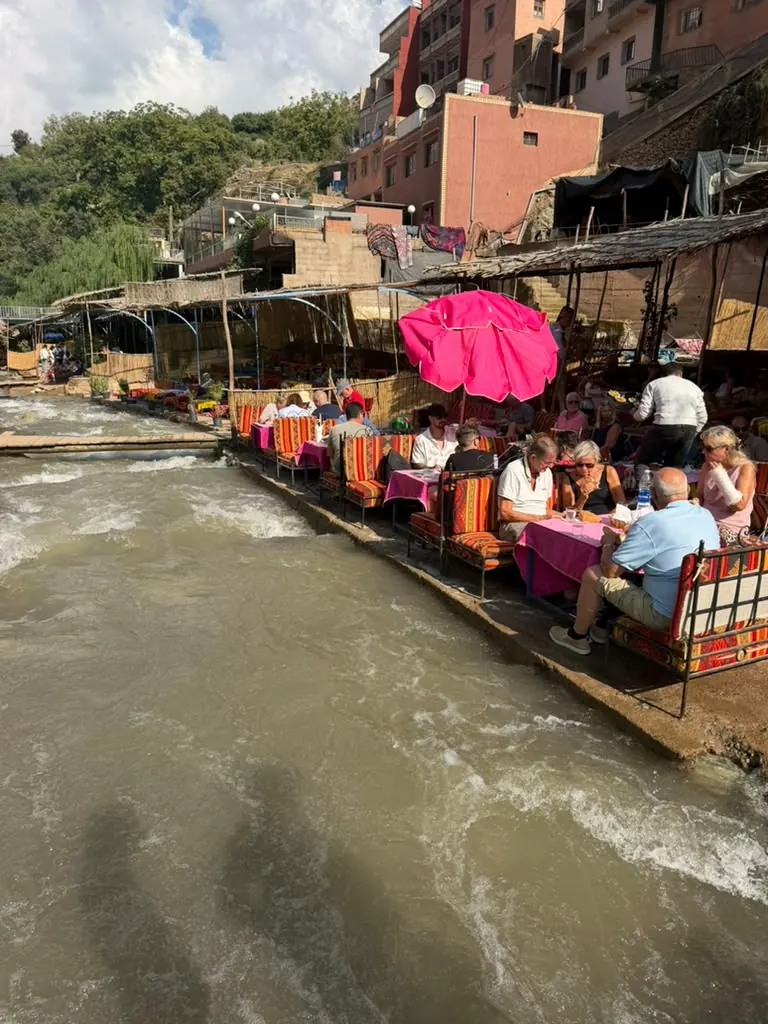
But the river is the boss. In early August 2025, a flash flood damaged riverside cafés and swept away their carpets and furniture. Nobody was reported hurt, but owners lost a lot.
My rule: in summer, if dark clouds build over the peaks in the afternoon, eat on a terrace above the river, not beside it. I watch the forecast every day and change the plan when I need to.
What I'd skip, honestly
Camel photo stops
On the drive up, you may see camels by the road waiting for photos and short rides, and some tours stop there. Camels belong to the desert. Up here, our working animals are mules and donkeys. If a camel ride is on your list, do it in the Agafay, the stony desert about 30 km southwest of Marrakech, where the landscape makes sense for a camel.
Argan "cooperatives"
Some tours stop at an argan shop. But argan trees don't grow in the Ourika Valley. They grow in the southwest of Morocco, around Essaouira, Agadir and the Souss plain, so the argan oil sold here comes from nuts grown far away. It's fine to buy some. Just know it's a shop stop, and compare prices.
Looking for monkeys
People ask me about Ourika Valley monkeys all the time. The famous monkeys that climb on tourists live at the Ouzoud waterfalls, about 157 km northeast of Marrakech. But wild Barbary macaques do live in the Ourika Valley too. A conservation visit in summer 2024 found three groups: one near tourist spots, where visitors feed them junk food, one in apple orchards, and one in remote rocky areas. Don't plan a day around them, and please don't feed them. Human food is bad for them and makes them pushy. To compare the two trips, read Ourika vs Imlil vs Ouzoud.
Self-appointed "guides" at the bridge
At Setti Fatma, men offer to guide you as soon as you park. Some are self-appointed and ask roughly 100–150 MAD (2026) for the walk to the first waterfall, which you can do alone. For the higher falls, agree the price first or use the official guides' office. My full answer is in Ourika Valley without a guide?
How long to spend in the Ourika Valley
| Time | What fits | Good for |
|---|---|---|
| Half day (5–6 hours door to door) | The first Setti Fatma waterfall, lunch by the river | A first look |
| Full day | A real hike, lunch, one stop on the way back (Anima or the Ecomusée) | Most people |
| Monday plan | The Tnine Ourika souk early, then a hike and lunch | Market lovers |
For an hour-by-hour plan with prices, see my Ourika Valley day trip from Marrakech guide.
Getting here and when to come, in brief
Getting here. Come by private car, taxi, shared grand taxi or on a tour. Setti Fatma is about 1 to 1.5 hours from Marrakech, and shared grand taxis leave when they are full. All the options and 2026 prices are in how to get to the Ourika Valley. My hikes don't include hotel or riad pickup. You make your own way to the meeting point we agree. For Villages, Caves & Waterfalls, that's the bridge near the Maison du Meunier Berbère (map), about an hour by car from Marrakech. No car or driver? Tell me when you book, and I can help you organise transport.
When to come.
| Season | What it's like |
|---|---|
| Spring (March–May) | Blossom, green terraces, strong waterfalls. |
| Summer (June–August) | Cooler than Marrakech, still hot on the trail. Start early. Crowds, storms, flash-flood risk. |
| Autumn (September–November) | Great walking weather. Saffron from late October. |
| Winter (December–February) | Snowy peaks, clear days, cold mornings. |
The month-by-month version is in the best time to visit the Ourika Valley. I guide most in spring and autumn, the best seasons. In summer and winter, ask me on WhatsApp: I may still guide, with early starts in summer. I also guide during Ramadan.
Spend a day here with me
If you read this far, you already know more than most tour buses. Now come and see it with someone who was born here. Start with Villages, Caves & Waterfalls (5 hours, moderate, private or shared). I also do Hidden Waterfalls (about 4 hours), Tea & Tagine at Home (about 3 hours, easy) and a Full Day from Marrakech, back by sunset (I can help you arrange the ride).
What it costs. You pay per hike, and the price depends on how long a walk you choose. A shared hike is 200–300 MAD per person (about €18–28). If you come alone or as a couple, I match you with other travellers on the same day. A private hike is 400–600 MAD for your whole group (about €37–55), so for two or more people, private costs the same as shared, or less. Hotel pickup is not included. We agree the price on WhatsApp before the day; see my prices. The price includes drinking water. Lunch, snacks, transport, any entry fees and tips are paid by you. Groups are up to 7 people.
Guests rate their day with me 4.9 out of 5 on average. Sterre wrote: "I felt really safe. Khalid helped me do a beautiful hike that I didn't think was possible with my fear of heights, haha!" Read more, or leave your own, in the reviews.
See them all on my tours page, then message me on WhatsApp or call me on +212 625 015 514. Send me your dates, and I'll tell you honestly which one fits.
En français : que faire dans la vallée de l'Ourika ? Les cascades de Setti Fatma, une randonnée dans les villages berbères et la grotte, le thé chez une famille, et le souk du lundi à Tnine Ourika. Je parle français : écrivez-moi sur WhatsApp.
FAQ
Is there an entrance fee for the Ourika Valley?
No. Driving into the valley and walking to the first Setti Fatma waterfall are free. You may pay a small parking fee at Setti Fatma, plus lunch, a guide if you want one, and private places such as the Anima garden, which listed 140 MAD for adults in October 2026.
What is there to do in the Ourika Valley if you don't want to hike?
Plenty. Visit the Monday souk in Tnine Ourika, the Ecomusée Berbère in Tafza and the Anima garden, eat tagine by the river, and drink mint tea in a village home. The first Setti Fatma waterfall is only a 20-minute walk, but it's steep, so wear proper shoes.
Are there monkeys in the Ourika Valley?
Yes, but not the famous ones you see in photos. Those Barbary macaques live at the Ouzoud waterfalls, about 157 km northeast of Marrakech. A 2024 conservation visit found three wild groups in the Ourika Valley, one near tourist spots, one in apple orchards and one in remote rocky areas. Please don't feed them.
How long should you spend in the Ourika Valley?
A half day (about 5–6 hours door to door from Marrakech) covers the first waterfall and lunch. For a real hike to the villages and caves, plan a full day. On a Monday, add an hour or two for the souk.
Is the Ourika Valley worth visiting?
Yes, if you go beyond the busy first waterfall. It's one of the closest real tastes of the High Atlas from Marrakech, cooler in summer, and full of Amazigh village life. Skip the camel and argan stops and spend that time walking.