Berber Village Tour from Marrakech: Real Homes, Not Staged Stops
 By Khalid, local Amazigh guide7 min read
A Berber village tour from Marrakech should feel like a visit, not a show. How to spot staged stops, village etiquette and lunch with a family. Come have tea.
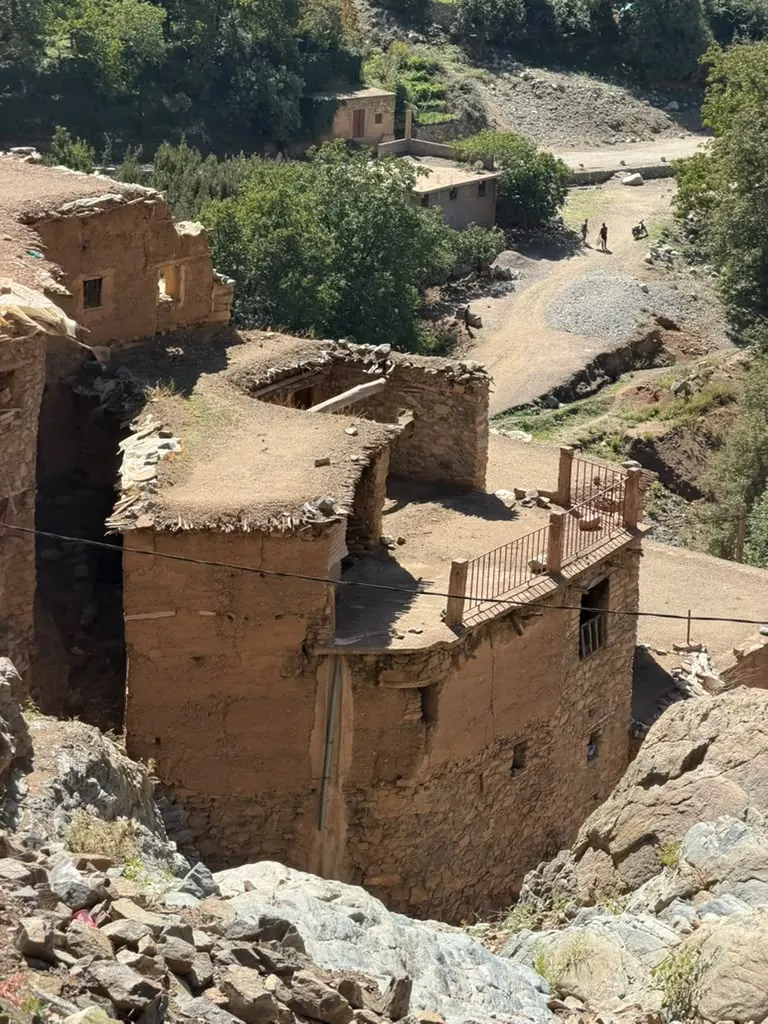
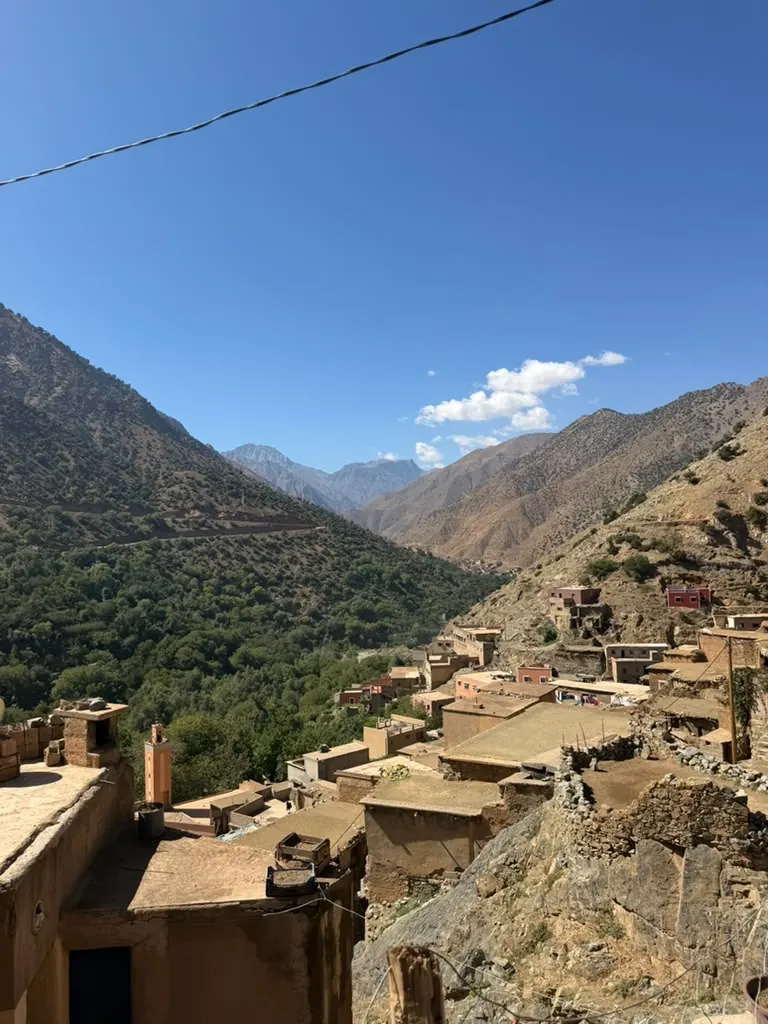
A good Berber village tour from Marrakech takes you to a village where people really live: goats on the path, water running in the field channels, a neighbour calling you in for tea. Some of the closest mountain villages are in the Ourika Valley, which starts about 30 km south of Marrakech, less than an hour's drive. I'm Khalid. I grew up in an Amazigh village in this valley, and this is how to find the real thing.
Quick answer: Some of the closest Berber mountain villages are in the Ourika Valley, about 30 km from Marrakech (under an hour by car). For a real visit, choose a tour that walks through a village for an hour or more with a local guide, not a 30-minute tea stop on a bus route.
Berber or Amazigh? Same people, two words
Are Amazigh and Berber the same? Yes. Amazigh is the name we use for ourselves; outsiders often say Berber. One person is Amazigh, many are Imazighen. The word is often translated as "free people", but scholars still argue about the exact meaning.
"Berber" came from outside. It is linked to old words for "barbarian", and many Amazigh people find it rude. My own feeling: I'm happy with "Berber", and I'm proud of the word Amazigh too. I use "Berber" in my headings because that is what people type into Google.
In the Ourika Valley we speak Tashelhit, the Amazigh language of the western High Atlas and the south. It's my mother tongue; I also speak Arabic, French, English and a little German. Amazigh became an official language of Morocco in 2011, which is why you see Tifinagh letters on road signs. So the difference between Berber and Amazigh is not about different people. It's about who chose the word.
The closest Berber villages to Marrakech
If you mean a mountain village with terraces and earth-and-stone houses, the Berber villages near Marrakech start roughly 30 km south of the city. (Searching in French for a "village berbère proche Marrakech"? Same answer.)
| Area | Rough drive from Marrakech | What you find |
|---|---|---|
| Lower Ourika Valley (around Tnine Ourika) | About 30–35 km, under an hour | Green river valley, villages on the slopes, Monday souk at Tnine Ourika |
| Upper Ourika Valley (Setti Fatma) | About 60–65 km, 1–1.5 hours | End of the paved road at roughly 1,500 m, seven waterfalls, busy river cafés, quieter villages up the side paths |
| Asni | About 45 minutes | Village on the road to Imlil and Toubkal |
| Imlil | About 1–1.5 hours (17 km past Asni) | Trekking base for Jbel Toubkal (4,167 m), steeper walking |
I'm biased, of course. But Ourika is one of the closest valleys and the gentlest, and its villages are farms and homes first. If you want the Atlas Mountains and Berber villages in one day and are still choosing a valley, read my honest guide to an Atlas Mountains day trip from Marrakech.
What a Berber village tour from Marrakech usually looks like
Most packaged day tours to the Ourika Valley follow a similar plan. Pickup in Marrakech. A drive with photo stops. Then "a traditional Berber house" for mint tea and a quick look at daily life. Then an argan oil cooperative. Then Setti Fatma, a short walk to the waterfalls and lunch at a riverside café.
In the tour listings, the house stop is often around 30 minutes. Many tours seem to use the same few houses, and some have a corner selling rugs or argan oil. I'm not angry about this. Families earn money, and the tea is real tea. But you see one room, drink one glass and get back in the van. That's a show, not a visit. (One honest detail: argan trees don't grow in the Ourika Valley. The cooperatives here work with kernels brought from hundreds of kilometres away.)
To compare prices: in 2026 listings, shared Ourika day tours start at around US$11 per person. Private day trips run from roughly US$35 to US$150 or more per person, depending on group size. Read the small print. Some private trips are a car and a driver only, and some listings put lunch and the mountain guide under "not included". For comparison, my own hikes cost 200–300 MAD per person in a shared group (about €18–28), or 400–600 MAD for a private group (about €37–55 for the whole group). The price depends on the length of the hike, and transport from Marrakech is not included. See my prices.
How to spot a staged stop before you book
Ask the operator these questions. A real local guide answers them easily.
- How long do we walk inside the village? Thirty minutes at one house is a stop. An hour or more on village paths is a visit.
- Whose home is it? "My aunt's" or "my neighbour's" is a good answer. "A typical Berber house" is not an answer.
- How many groups go to that home each day?
- Is there a shop, cooperative or carpet stop? Can we skip it?
- Who cooks lunch, and who gets the money? Some tours don't include lunch in the price at all. Either way, ask how much reaches the family.
- Is the guide from the valley? Ask if they speak Tashelhit. In a village, that is the key that opens doors.
Warning sign: one day that squeezes a Berber house, a cooperative, a shop and the seven waterfalls into a tight timetable. That's a bus circuit, not a village.
A Berber village hike in the Ourika Valley
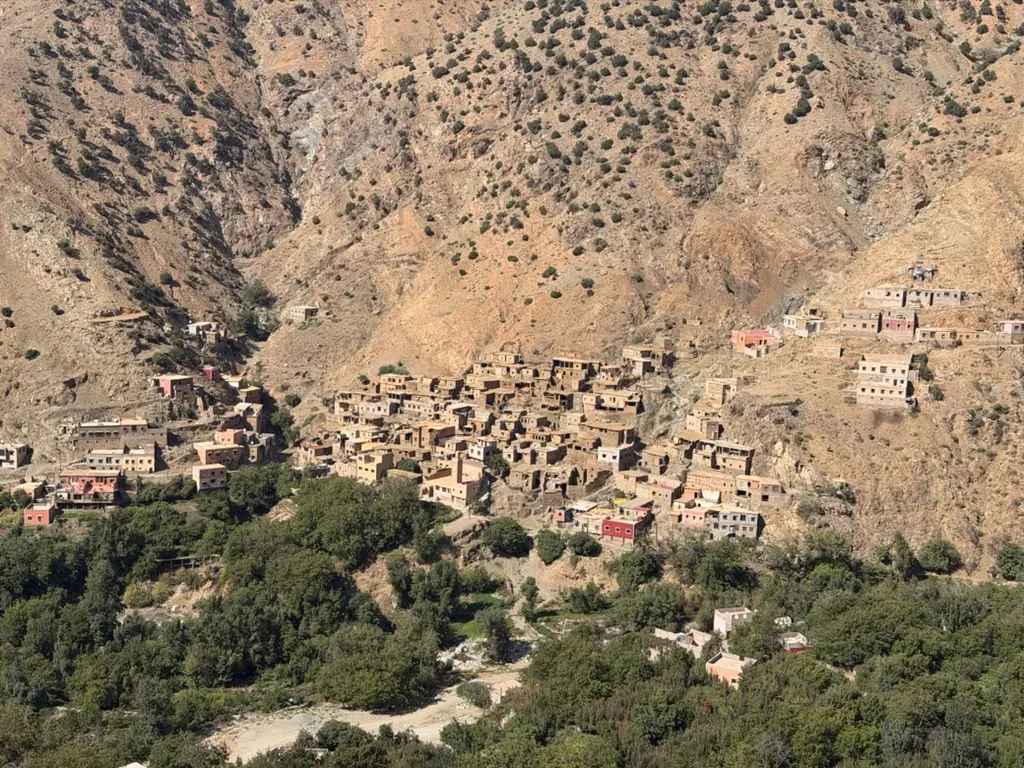
Here is what a real walk looks like in my valley. Houses of earth and stone, the same colour as the mountain. Terraces stepping down to the river, with vegetables and fruit trees. Small water channels called seguias run between the fields, and families share that water between them, an old system that still works.
You'll meet goats, and the people who own the goats. They will greet you. Greet them back; that's half the visit.
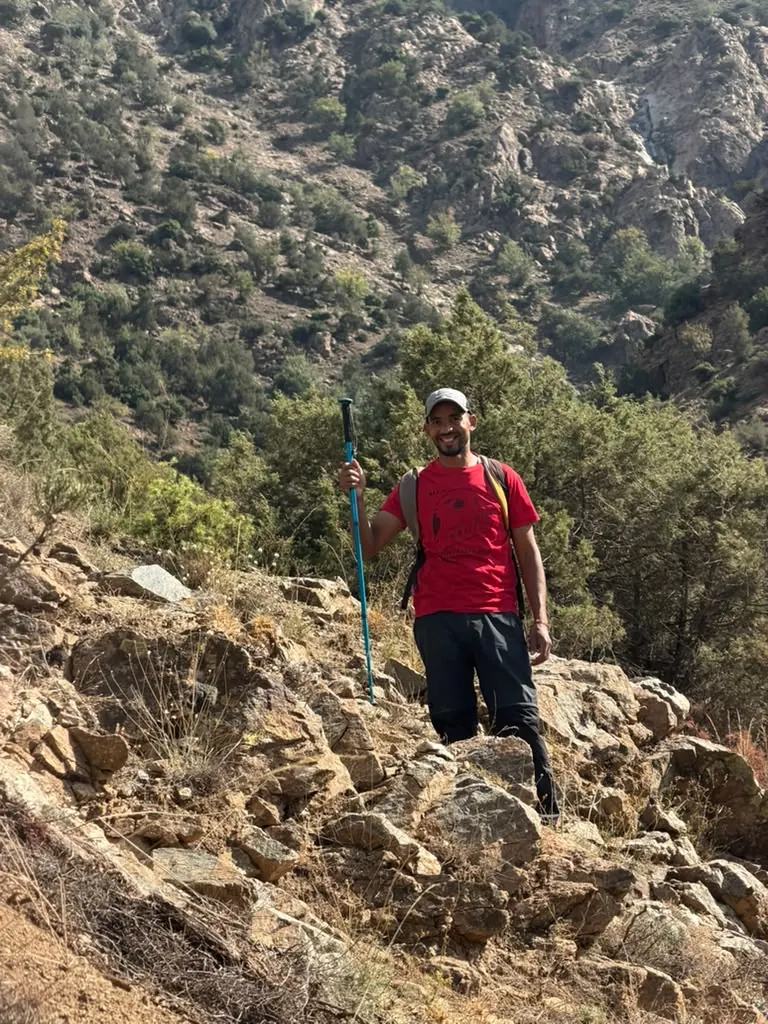
A recent group walked with me through a village, then up into dry hills that look almost like desert, past goats and villagers, and into a cave. We met a bat and some giant beetles, and we laughed most of the way. That's my Villages, Caves & Waterfalls walk on the tours page. For more ideas, see my list of things to do in the Ourika Valley.
"It was fun to be around him. I learned a lot, and it was exciting too. I did new things, I saw new things. It was very cool." — Siem
Lunch with a Berber family: what's served and who gets paid
A Berber village lunch usually goes like this. You take off your shoes and sit on cushions around a low table. First comes mint tea. Then bread, salads, a slow-cooked tagine and fruit to finish. You eat from the shared dish, using bread and your right hand.
On my Tea & Tagine at Home tour, the meal is a simple home lunch like this. The menu depends on the day, and lunch is paid by guests, not included in my price (only drinking water is). If you are vegetarian or have an allergy, tell me on WhatsApp when you book.
Who gets paid: on any tour, ask. A fair answer is a clear amount that goes to the family. If you want to leave something extra, read my guide on how much to tip a tour guide in Morocco.
A small fun fact: the green tea in our mint tea came to Morocco with British traders in the 18th and 19th centuries. Today no home would let you leave without it.
Village etiquette: the short version
- Dress: cover shoulders and knees, men and women. Light long trousers are better for hiking anyway.
- Shoes: take them off before you step onto the rugs. Do what your host does.
- Right hand: eat and pass bread with your right hand.
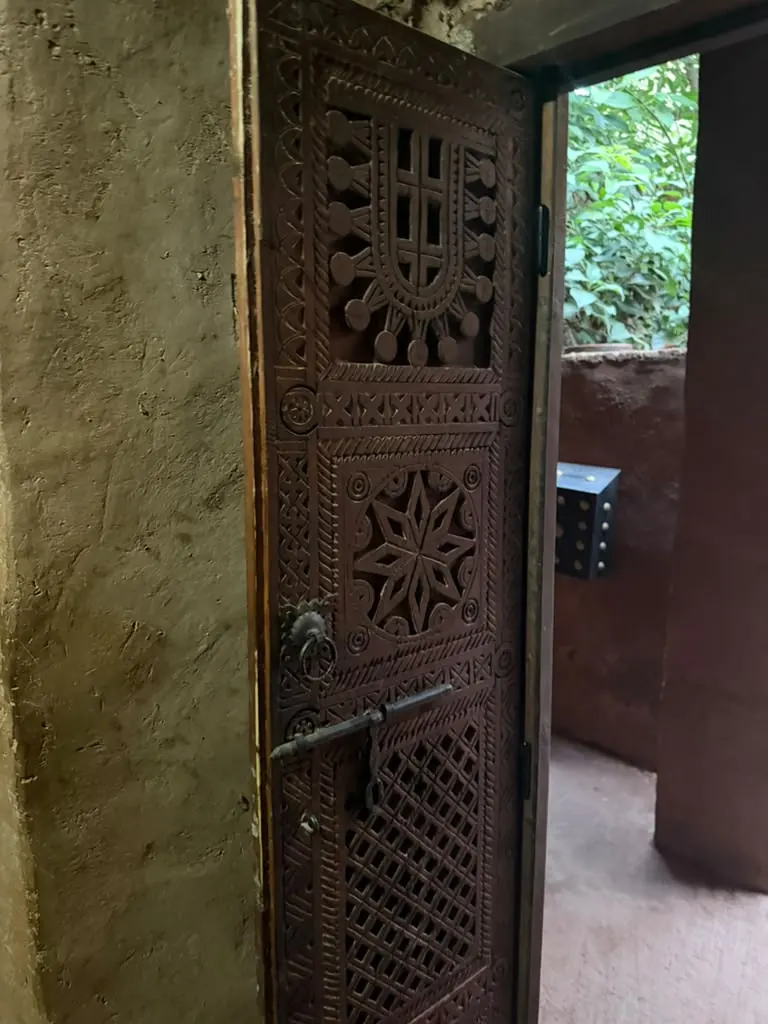
- Photos: always ask first, especially before photographing women. Doors, mountains and goats are fine. If someone says no, smile and put the phone away. (The goats never say no.)
- Children: please don't hand out sweets, pens or money. It teaches kids to run after every visitor. If you want to help, give through the local school or a village association. Ask me and I'll point you to one.
- Ramadan: the next one is expected to start around 8 February 2027, give or take a day, depending on the moon. Families fast from dawn to sunset, so don't eat or drink in front of people in the village. Yes, I still guide during Ramadan; ask me on WhatsApp what works on your day.
- The third glass of tea: tea usually comes in rounds, often three. Tea is how we say welcome, so accept at least the first glass. Guidebooks love a saying about the three glasses: one for life, one for love, one for death. The books don't even agree which glass is the bitter one. When you've had enough, put your hand on your heart and say tanmmirt.
Five Tashelhit words for the trail
Use these and watch faces light up. Spellings vary, so don't worry about getting them perfect.
| Word | Meaning | When to use it |
|---|---|---|
| Azul | Hello | Many people simply say salam. Both work. |
| Tanmmirt | Thank you | After every glass of tea |
| Ih | Yes | "More bread?" |
| Uhu | No | "More bread?" (after the fourth piece) |
| Aman | Water | On the dry hills |
Bonus: count goats with yan, sin, krad (one, two, three).
Come have tea in my valley
If you want a quiet afternoon with a family, choose Tea & Tagine at Home: about 3 hours, easy walking, lunch in a village home (lunch paid by guests), for up to 7 people. If you want to walk through several villages, up the dry hills and into a cave, choose Villages, Caves & Waterfalls (5 hours, moderate, private or shared, up to 7 people). My hikes are between 5 and 15 km depending on the route. Most run in spring and autumn; in summer or winter, ask me on WhatsApp. Both are on my tours page.
There is no hotel pickup. You make your own way to the meeting point we agree, about an hour by car from Marrakech. No car or driver? Ask when you book and I'll help you organise transport. Message me on WhatsApp or call me on +212 625 015 514, and we'll agree the price before the day. I'll put the kettle on.
FAQ
Are Amazigh and Berber the same?
Yes, they are the same people. Amazigh (plural Imazighen) is our own name; Berber is the word outsiders use, and many of us dislike it. Amazigh is often translated as "free people", though the meaning is debated.
What is the closest Berber village to Marrakech?
Some of the closest mountain villages are in the lower Ourika Valley, about 30 km south of Marrakech, less than an hour by car. On the road to Toubkal, Asni is about 45 minutes away. Imlil, the Toubkal trekking village, takes about 1 to 1.5 hours.
Is it respectful to visit a Berber village?
Yes, if you come as a guest, not a spectator. Walk with a local guide, dress modestly and ask before taking photos of people. Make sure the family is paid fairly for any tea or meal.
Can I bring gifts for a Berber family?
A small gift for your host is a kind touch. Tea, sugar or sweet pastries are traditional. Please don't give sweets, pens or money to children in the street; ask your guide about the local school instead.
Is a Berber village tour OK for solo women?
Yes. Women travelling alone are generally welcome in the valley's villages and homes. Cover shoulders and knees, as local women do, and book a guide you have checked first, through reviews or a direct chat.