Best Time to Visit the Ourika Valley: A Local's Month-by-Month
 By Khalid, local Amazigh guide9 min read
Best time to visit the Ourika Valley, month by month: weather, snow, flash floods and crowds, from a Berber guide born here. Check your dates with me.
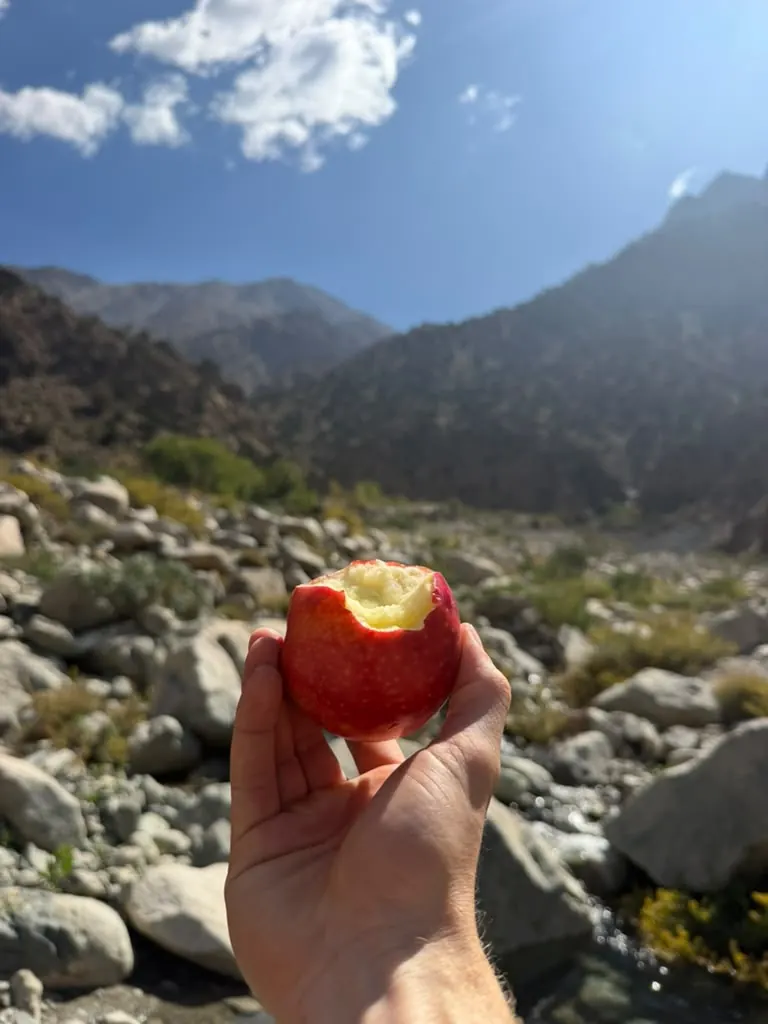
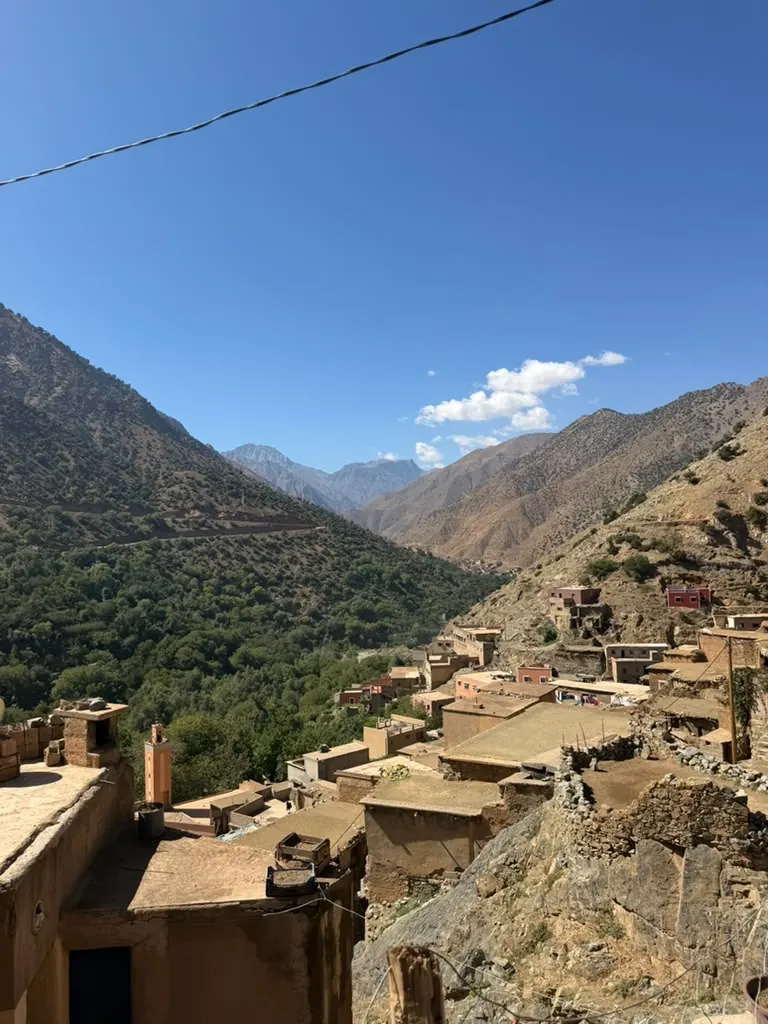
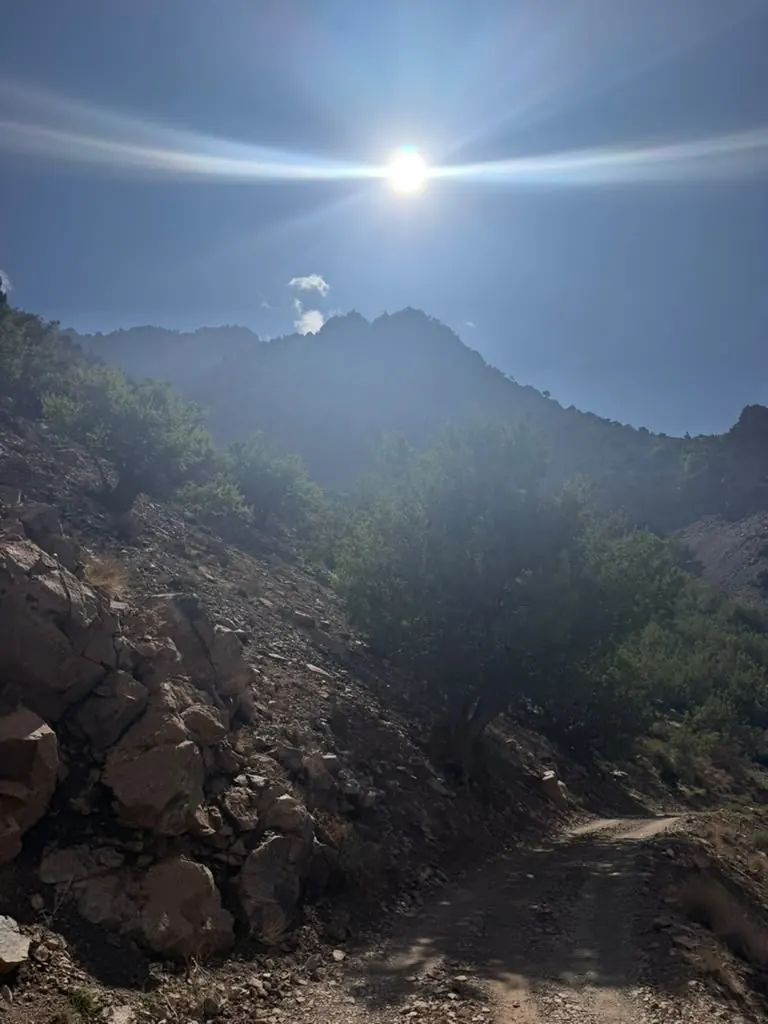
The best time to visit the Ourika Valley is spring (March to May) and autumn (September to November). The days are warm, the nights are fresh and the paths are usually dry. Summer works if you start early, and winter is lovely on clear days if you bring a real jacket.
Quick answer: Come in March–May or September–November. Up at Setti Fatma it's roughly 5°C cooler than Marrakech. In any month, stay out of the riverbed when storms are around, because the river can flood fast.
I was born in this valley, about an hour's drive from Marrakech. Here is what each month feels like on the trail, plus the one thing I ask every guest to respect: the river.
The short answer: the best time to visit the Ourika Valley
If you were my cousin flying in from abroad, I would tell you this:
- Best: March to May and late September to November. Warm days, cool nights, green terraces in spring, dry golden hills in autumn.
- Good, with a warm jacket: December to February. Lots of clear days, snow on the high peaks, cold mornings.
- Good, with care: June to August. Lots of Marrakech families drive up to escape the heat, so it's busy. Summer storms can fill the river very fast.
Honestly, there is no bad month. There are only bad days, and most of the time we can see those coming.
How much cooler is the Ourika Valley than Marrakech?
Marrakech sits at about 466 m. Setti Fatma, the last village on the paved road, sits at roughly 1,450 to 1,500 m, so about 1,000 m higher. Scientists measuring the Rheraya, the next valley to the west (the one that goes up to Imlil), found the average temperature drops about 4.6°C for every 1,000 m you climb. So my rough rule for the Ourika Valley temperature up at Setti Fatma: take about 5°C off the Marrakech number. Lower down the valley, near Tnine Ourika, the difference is smaller.
| Month | Marrakech high / low | Marrakech rain | Setti Fatma, rough estimate |
|---|---|---|---|
| Jan | 19 / 6°C | 25 mm | ~14 / 1°C |
| Feb | 21 / 8°C | 26 mm | ~16 / 3°C |
| Mar | 24 / 10°C | 35 mm | ~19 / 5°C |
| Apr | 26 / 12°C | 26 mm | ~21 / 7°C |
| May | 29 / 15°C | 11 mm | ~24 / 10°C |
| Jun | 34 / 18°C | 3 mm | ~29 / 13°C |
| Jul | 38 / 21°C | 2 mm | ~33 / 16°C |
| Aug | 37 / 21°C | 5 mm | ~32 / 16°C |
| Sep | 33 / 19°C | 15 mm | ~28 / 14°C |
| Oct | 29 / 16°C | 19 mm | ~24 / 11°C |
| Nov | 23 / 11°C | 30 mm | ~18 / 6°C |
| Dec | 20 / 7°C | 24 mm | ~15 / 2°C |
Marrakech: 1991–2020 averages, Menara station. Setti Fatma: my estimate (Marrakech minus about 5°C), not an official measurement. The high trails are colder again. Ourika Valley rain follows the city's pattern, mostly November to April, but the mountains get more of it (in the Rheraya, yearly rain goes up by about 166 mm for every 1,000 m), plus summer storms.
Ourika Valley weather, month by month
Ourika Valley in January
The coldest month. In the lunchtime sun it feels like spring. When the sun drops behind the mountain, you want every layer you own. Snow usually stays on the peaks, but a cold spell can bring it down to us: at the end of January 2023, snow covered the houses around Setti Fatma, with about 5°C by day and −5°C at night. Very few visitors.
Ourika Valley in February
Still cold, but the days are longer and the sun is stronger. Late in the month, the first trees may start to flower; it changes a little every year. In 2027, Ramadan is expected to start around 8 February; see the crowds section below.
Ourika Valley in March
Spring arrives. In Marrakech's records March is the wettest month, so pack a rain layer. As the snow up high melts, the river usually runs fuller and louder. Early March is often when the almond and cherry trees flower, and the terraces turn green.
Ourika Valley in April
One of the best months to walk. Days around 20°C, fresh mornings, green fields and fruit trees in flower. The exact blossom weeks change with each year's weather, so ask me on WhatsApp. Keep a light jacket for showers.
Ourika Valley in May
Long, warm days and dry paths. Great for a longer hike if you start in the morning. By late May the open hills are hot by noon.
Ourika Valley in June
Marrakech is around 34°C, and up at Setti Fatma it's a welcome five degrees or so cooler. Weekends fill up with families from the city. Start early, finish by lunch.
Ourika Valley in July
Marrakech is close to 38°C. The valley is cooler, but the dry hills are still hot at midday. Hike in the morning, then rest by the water. Storms can build over the peaks in the afternoon or evening.
Ourika Valley in August
Almost as hot as July, often the busiest month, and the one to be most careful in. Each August, Setti Fatma holds its moussem, a festival over several days for the saint the village is named after. August is also the month of the two floods below. That's not a reason to stay home. It's a reason to go with someone who watches the sky.
Ourika Valley in September
The heat softens as the month goes on. Storms are still possible, so I keep watching the forecast. The orchards start to get busy as autumn comes.
Ourika Valley in October
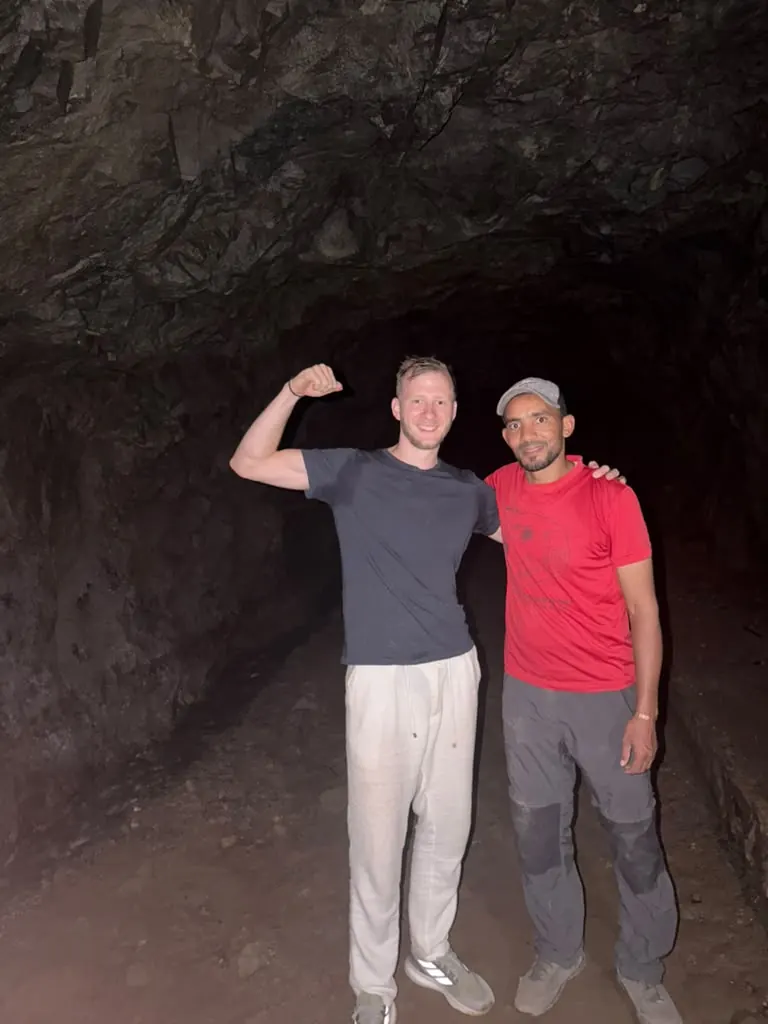
A great walking month: days around 24°C, cool evenings, dry hills, clear light. A recent group walked my Villages, Caves & Waterfalls route in October. They met goats and villagers, crossed hills that look like a small desert, found a bat in the cave and some very large beetles, and laughed most of the way. From late October, saffron flowers are picked at the valley's saffron farms.
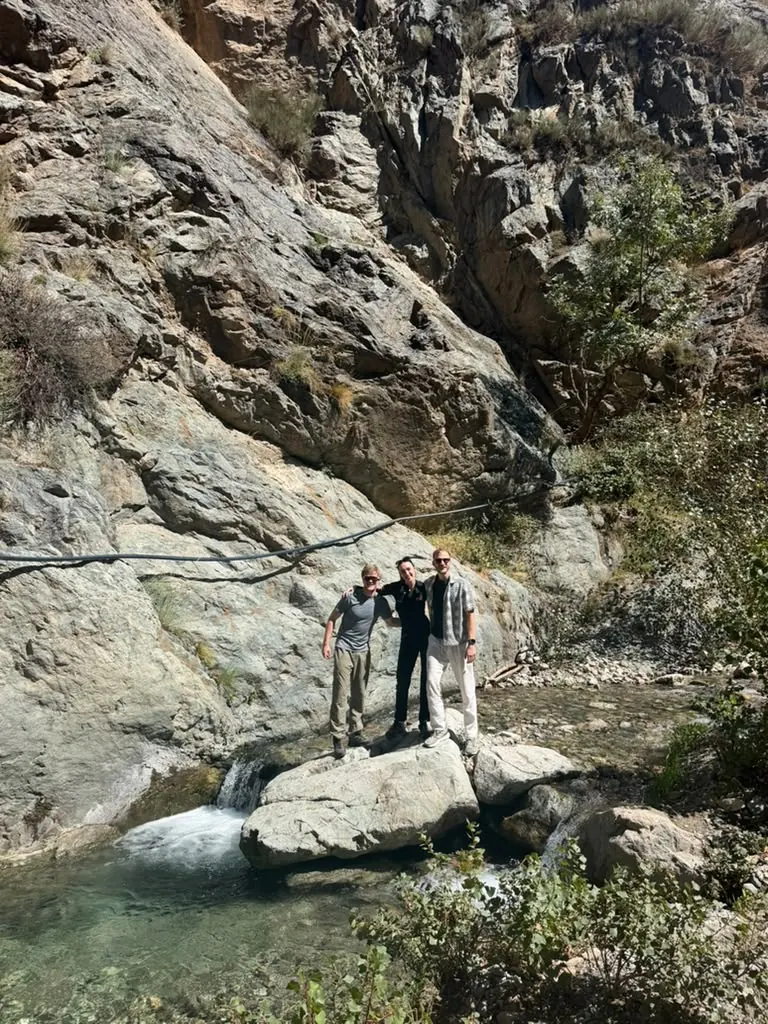
Ourika Valley in November
Saffron picking goes on until about mid-November. Days are shorter and cooler, around 18°C, and the first autumn rains can come. Snow can return to the high peaks. Few crowds.
Ourika Valley in December
Short days, nights near freezing, clear air and white peaks. In the sunny parts of the valley, walking at midday is a pleasure. Bring a warm layer for when the sun goes.
Is the Ourika Valley safe? The real danger is the river
Yes, the Ourika Valley is a safe place to visit. Solo travellers and women are welcome, and the villages are friendly. The people here are Amazigh, the name we use for ourselves (outsiders often say Berber), and a guest is a guest.
"I felt really safe. Khalid helped me do a beautiful hike that I didn't think was possible with my fear of heights, haha!" (Sterre, guest)
The real danger is the river. The mountains catch storms, and the water comes down steep, narrow valleys very fast. A flood can come in any season after heavy rain. Researchers say most floods in this part of North Africa come in autumn and early winter, but summer storms are the sneaky ones, and two of the Ourika's best-known floods came in August.
- 17 August 1995: a sudden summer storm sent a flash flood down the Ourika. The river peaked in about 45 minutes. More than 200 people were dead or missing.
- Early August 2025: heavy rain made the river rise fast again. The local authorities had warned people, but some café owners could not move their things in time. Riverside cafés lost carpets, furniture and metal frames to the water.
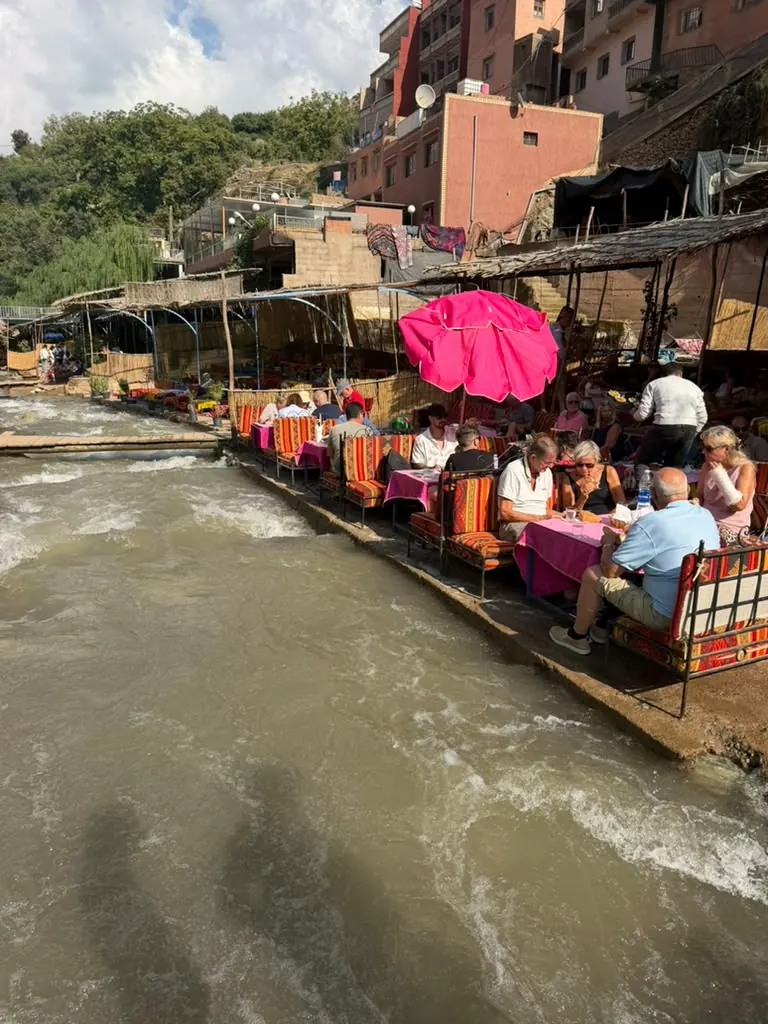
The Setti Fatma cafés are lovely for lunch. But look how close the tables are to the water. On a storm day, that's where the river goes.
My storm-day rules
- I check the forecast the night before and again in the morning.
- If storms are likely, we stay out of the riverbed and narrow gorges. I change the route to higher paths, or we move the day.
- Blue sky above you means nothing. The rain may be falling upstream, out of sight.
- If the water turns brown, gets louder, or local people tell you to move, climb away from the river at once. Leave your things.
- Never cross a stream that is rising.
Winter in the valley: snow on the peaks, ice on the high trail
The Ourika Valley in winter is quiet and clear, with snow on the peaks above. Up a side road from the valley is Oukaïmeden, a small ski area from about 2,600 m. Most of its snowy days come between January and March, but snow is never guaranteed, so check before you go.
Take care at the Setti Fatma waterfalls. The path to the first waterfall is a steep walk of about 20 minutes that most people manage. Above it, you climb over rocks and wet stepping stones, and on cold days they can ice over. On icy days, I'd stop at the first one. More in my Setti Fatma waterfalls guide, and for the wider Atlas, read hiking in Morocco in winter.
If you searched for "vallée de l'Ourika en hiver": yes, come, but dress for two seasons in one day.
Avoiding the crowds
- Come on a weekday. Saturdays and Sundays are when families from Marrakech come up.
- Watch the holidays. Moroccan school holidays, above all July and August, and the Eid holidays usually bring many more cars.
- The August moussem fills Setti Fatma for several days. Great for the festival, not for quiet.
- Monday is souk day in Tnine Ourika (tnine means Monday), so the town is busier. The market is worth a look.
- Ramadan is expected to start around 8 February 2027 and lasts about a month; the exact day depends on the moon. Most people in the villages fast from dawn to sunset, so please eat and drink discreetly near homes. Yes, I still guide during Ramadan.
- Start early. The first hours of the morning are the quietest everywhere.
What to pack for each season
Every season: closed shoes with good grip, 1.5 to 2 litres of water, sunscreen, some cash in small notes, and clothes that cover shoulders and knees for the villages.
| Season | Add to your bag |
|---|---|
| Winter (Dec–Feb) | Warm jacket, fleece, hat, gloves |
| Spring (Mar–May) | Light layers, a rain jacket, sunglasses |
| Summer (Jun–Aug) | Sun hat, extra water, a light long-sleeved top |
| Autumn (Sep–Nov) | A warm layer for the evening, a light rain jacket in November |
The night before, check the forecast for Setti Fatma (French speakers can search "météo Ourika") and message me if it looks stormy.
Do my Berber village hikes run all year?
Most of my hikes run in spring and autumn, the best seasons. In summer and winter, ask me on WhatsApp: I may still guide, with early starts in summer. If the weather is bad, we talk on WhatsApp and agree what to do. Hikes are between 5 and 15 km depending on the route, for groups of up to 7 people, and only drinking water is included. Whatever the month, I plan the day around the weather and the river. Compare the routes, with time and difficulty, in my Ourika Valley hikes guide, and see every tour on the tours page. For ideas beyond hiking, read my list of things to do in the Ourika Valley.
Ask me about the weather before you book
Weather websites are useful, but they don't stand next to the river. I do. Before you book anything, message me on WhatsApp with your dates, and I'll tell you honestly what the sky and the river are doing. If the day looks good, I'll point you to the Villages, Caves & Waterfalls hike, about 5 hours at a moderate pace: a Berber village, dry hills full of goats, a cave with bats, and waterfalls at the end. You can also reach me through the contact page.
What it costs: a shared hike is 200–300 MAD per person (about €18–28), and a private hike is 400–600 MAD for your whole group (about €37–55), depending on the length of the hike. We agree the price on WhatsApp before the day, and you can see more on my prices section. Hotel pickup is not included: you get yourself to the meeting point we agree (for this hike, the bridge near the Maison du Meunier Berbère, see the map), about an hour by car from Marrakech, and if you have no car or driver, ask me when you book and I can help you organise transport.
FAQ
What is the best month to visit the Ourika Valley?
April and October are hard to beat: warm days, cool nights and dry paths. March, May, September and November are also very good.
Is the Ourika Valley cold?
Up at Setti Fatma it's roughly 5°C cooler than Marrakech; lower down the valley, a little less. In winter, nights at Setti Fatma are near freezing and can drop below zero in a cold spell. In summer, that cooler air is why people come up from the city.
Does it snow in the Ourika Valley?
Snow falls on the high peaks most winters, and the ski area at Oukaïmeden opens when there's enough. The villages on the valley floor only get snow in cold spells, as in January 2023. The upper Setti Fatma waterfall trail can get icy.
Is the Ourika Valley safe?
Yes. The villages are friendly, and solo travellers and women are welcome. The real danger is the river in storms, as the floods of August 1995 and August 2025 showed. On stormy days, stay out of the riverbed and move away from the water if anyone warns you.
Is the Ourika Valley flooded?
Most days, no. Flash floods come after heavy rain and usually pass quickly, but they can damage riverside cafés and paths. Worried about a particular day? Message me on WhatsApp and I'll tell you what the river is doing.