Setti Fatma Waterfalls: The 7 Cascades Hike from a Local Guide
 By Khalid, local Amazigh guide9 min read
Setti Fatma waterfalls: how long the hike to each cascade takes, how hard it gets above the first fall, crowds, swimming and floods. Want quiet falls? Ask me.
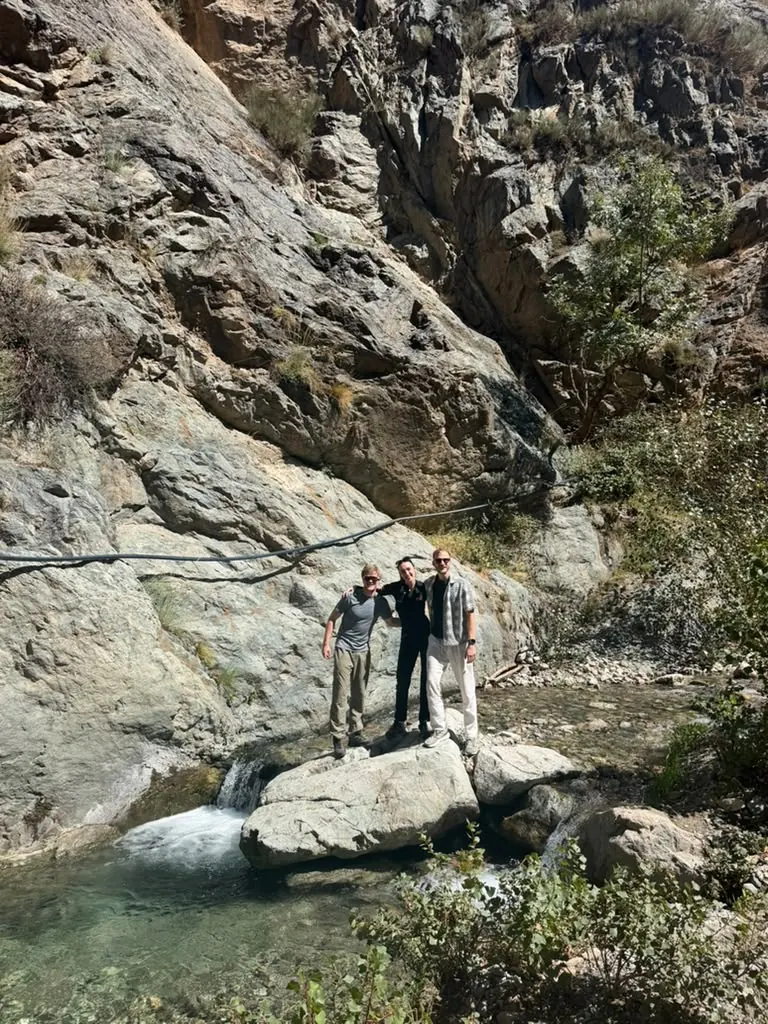
The Setti Fatma waterfalls are seven cascades in a rocky gorge above Setti Fatma, the last village on the paved road in the Ourika Valley. The first and biggest is a steep walk of about 20 to 40 minutes from the village. The highest is a bit more than an hour beyond that, and that part is a real scramble over wet rock.
Quick answer: First waterfall: about 20–40 minutes up a steep, rocky path with blue arrows, fine for most people in good shoes. All seven cascades: around 1.5 hours or more up from the village, with scrambling, so plan roughly 3 hours there and back. Times depend on your pace and the crowds.
I'm Khalid. I was born in the Ourika Valley, and I'm Amazigh, the name we use for ourselves; outsiders often say Berber. Online, some people call this Ourika Valley waterfalls hike "easy" and others say it was much harder than they expected. Both are right, just about different parts of the trail.
Setti Fatma waterfalls in one minute
| Question | Short answer |
|---|---|
| Where | Setti Fatma, at the end of the paved road in the Ourika Valley, roughly 60–65 km from Marrakech |
| Altitude | About 1,500 m in the village |
| First waterfall | About 20–40 minutes up. Steep, rocky, blue arrows |
| All seven | Around 1.5 hours or more up. Scrambling on wet rock above the first fall |
| Cost | No ticket for the trail. A small parking fee. A guide is optional |
| Best time to start | Early morning, on a weekday |
| Don't go | When storms are forecast, or when the river is rising or suddenly turns brown |
Where Setti Fatma is and where the trail starts
The valley road follows the Ourika River past Tnine Ourika and Aghbalou and stops at Setti Fatma, at roughly 1,500 metres. From Marrakech it's about 60–65 km, or 1 to 1.5 hours by car. Taxis, buses and drivers are in my guide on how to get to the Ourika Valley from Marrakech.
Setti Fatma parking: men may wave you into a spot and ask for money later. Expect a small fee in dirhams, and check the price locally. Agree it before you leave the car. Wikivoyage's tip is simpler: ignore the people who try to show you where to park, and find a spot along the river yourself.
The trail start: in the main part of the village, cross the river on one of the small bridges, then follow the blue arrows. Lost the arrows? Follow the people in front of you. There are usually plenty.
To the first waterfall: the steep 20–40 minutes most visitors do
This is the Setti Fatma trail everyone knows: short and steep, with rock steps, dirt, small cafés and wet stepping stones across the water. So many shoes have worn the rock smooth that it can be slippery even when it's dry.
A fit person on a quiet morning gets there in about 20 minutes. With children, a crowd or a mint tea stop, count on 40.
The Ourika Valley's first waterfall is the lowest and the biggest of the seven. Most people take their photos here and go back down for lunch. Honestly, that's a good day out, and you don't need a guide for it.
Above the first waterfall: scrambles, wet rock and stepping stones
Right above the first fall, an almost vertical climb of about 10 minutes takes you to a viewpoint with a small snack stand. After that, the trail gets much harder:
- Wet rock from spray and little streams.
- Climbing, not walking, on the steep bits. You will use your hands.
- No clear path in places. The trail goes into the stream and you step from rock to rock.
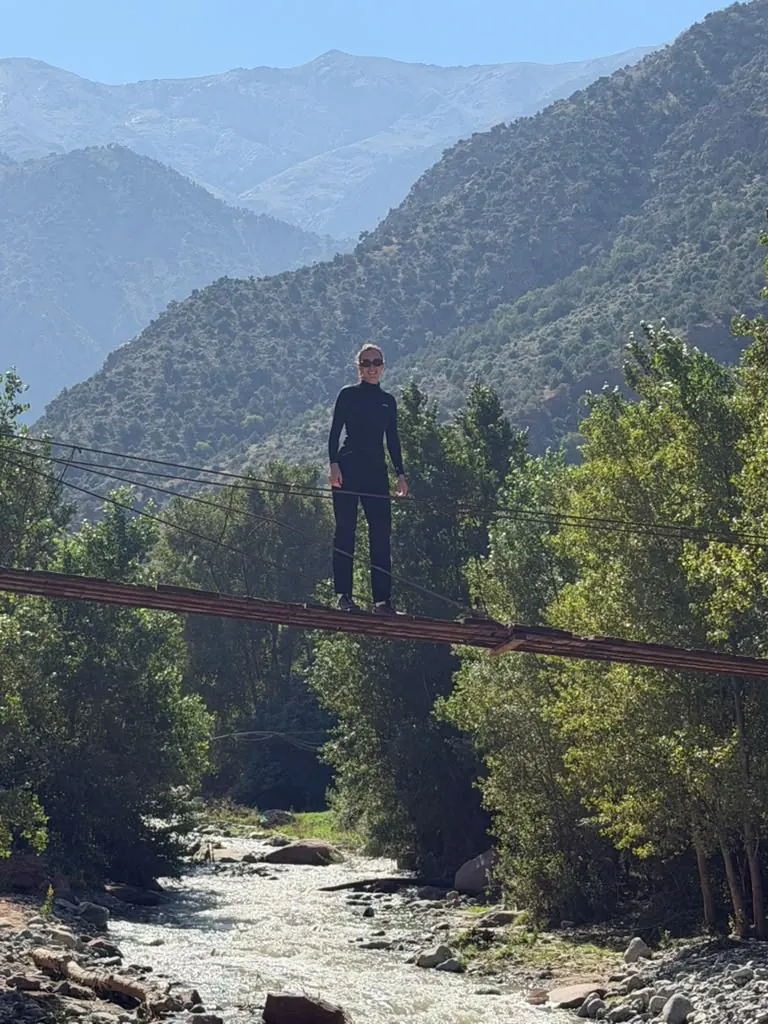
- Simple bridges and ropes in some places. What's there changes from year to year, so ask me on WhatsApp before you go.
After heavy rain or a flood, things move, and parts of the trail can be closed for a while. A crossing you used in spring may be gone by autumn.
Setti Fatma hike difficulty, honestly: you don't need climbing skills, but you will use your hands. Turn back at the first fall or the viewpoint if you have small children, bad knees or a fear of heights, if you're wearing sandals, or if it rained recently or clouds are building over the peaks.
My rule: when you stop having fun, turn around. You've already seen the biggest waterfall.
How many waterfalls are there, and how long to reach them all?
Seven. That's why you'll see "Setti Fatma and the 7 cascades", or in French "Setti Fatma et les 7 cascades". Of the seven waterfalls of Setti Fatma, the lowest is the biggest. The highest is the smallest, and the hardest to reach. One more honest note: in a dry spell, some falls can be quite thin. After rain they look much better.
| Stretch | Time one way | What it's like |
|---|---|---|
| Village to the first waterfall | About 20–40 min | Steep, rocky, blue arrows |
| First waterfall to the viewpoint | About 10 min | Very steep, almost vertical |
| Viewpoint to the highest waterfall | About 1 hour | Scrambling, wet rock, stepping stones |
| The whole walk, up and back | Roughly 3 hours or more with breaks | Tiring, and slippery on the way down |
These times are rough. They depend on your pace, the crowds and the state of the trail.
The way down is where people slip: tired legs, wet rock, a phone in one hand. Go slower than you went up.
The waterfall "guides", in short
Locals will offer to guide you. Wikivoyage puts their asking price at around 100–150 MAD just to the first waterfall, and prices today may differ. You don't need one there. For the upper falls, a guide helps more. Whoever you take, agree the price first, and read Ourika Valley without a guide for the full story.
Can you swim in the Ourika waterfalls?
You can get in, but think "cold dip", not "swim". The water comes down from the High Atlas and is cold, even in summer. The pools are small and rocky, and you can't always see what's under the surface. If you go in, keep it short and stay at the edge.
- Don't jump or dive. Rocks hide under the water.
- Stay where you can stand, and never go in when the water is brown or the sky over the peaks is dark.
- This is a village with a saint's shrine, so put a T-shirt on when you get out.
Where to eat at Setti Fatma
The Setti Fatma restaurants are mostly cafés along the river, with tables and bright cushions right by the water. They serve salad, tagine and mint tea. Ask the price or see a menu before you sit down. Above the first fall, the snack stand at the viewpoint is a good spot for a drink with a view.
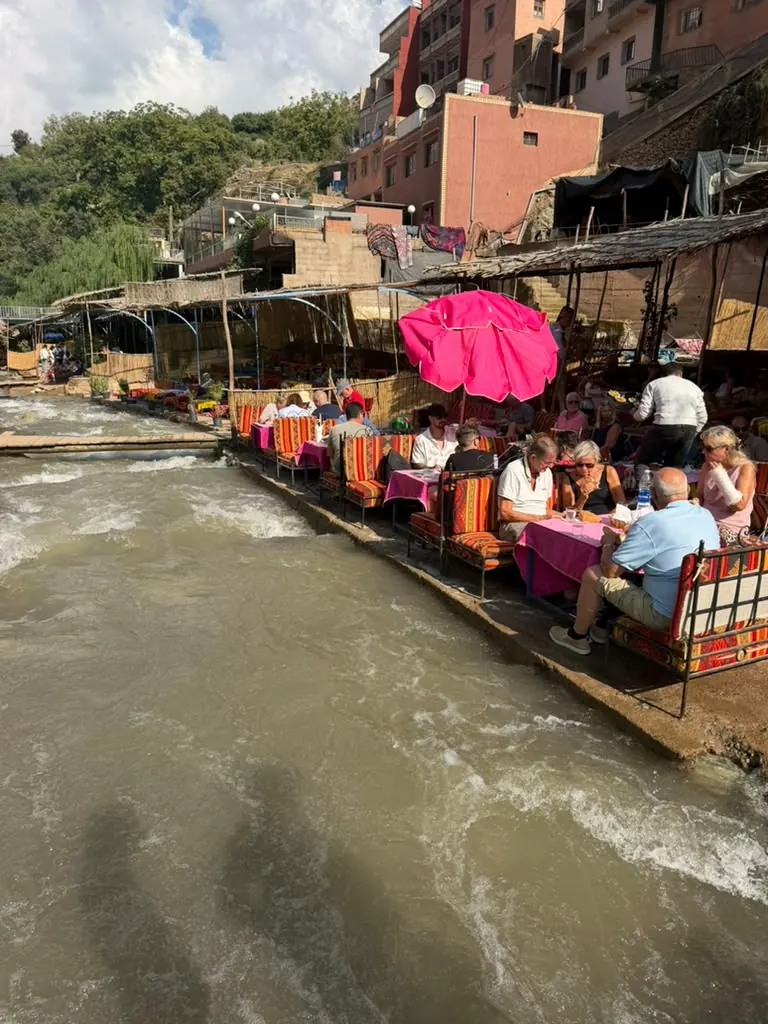
One honest warning: these riverside tables are the first thing a flood hits.
Crowds: weekends, holidays and the August moussem
Setti Fatma is the most famous stop in the valley, so it gets busy:
- Weekends: families from Marrakech come up for the day.
- Summer: Marrakech is very hot, so the river fills with people cooling off.
- Holidays: Moroccan school and public holidays can be busy too.
- The Setti Fatma moussem: each August, over several days, the village holds a festival for the saint whose name it carries. Local legend says Setti Fatma was a holy woman, and her shrine (the koubba) is here in the village. Pilgrims and families come for a fair and a market. Lively, but not the day for a quiet walk. The dates move a little each year, so ask me before you plan around it.
At busy times there can even be a queue on the path. For quiet, come early on a weekday, in spring or autumn. My month-by-month answer is in the best time to visit the Ourika Valley.
Floods and summer storms: when not to go
The Ourika River looks friendly, and most days it is. But rain that falls high in the mountains can come down the valley fast, even when the sun is shining where you are.
- On 17 August 1995, a sudden storm sent a flash flood down the valley. The river peaked within about 45 minutes, and more than 200 people were left dead or missing.
- In early August 2025, another flash flood hit riverside cafés in the valley and swept away carpets, furniture and iron frames. No injuries were reported.
Both in August, when thunderstorms can build over the peaks in the afternoon. But floods are not only a summer thing. Scientists studying the nearby Atlas valleys found that most floods there come in autumn and early winter, after heavy rain. A rising, brown river is dangerous in any season. So:
- Never sit, picnic or nap in the riverbed on a summer afternoon.
- Watch for dark clouds over the peaks, water turning from clear to brown, a louder river or branches in the water. See any of these? Go up, away from the water, straight away. Don't finish your tagine first.
- Skip the upper falls after heavy rain.
When storms are forecast, I change the route or the day. We agree what to do on WhatsApp.
What to wear (not sandals) and what to bring
- Shoes with grip: trail shoes or light hiking boots. Not sandals, not flip-flops, not your new white trainers.
- Clothes: light, covering shoulders and knees in the village, plus a warm layer for the cold shade of the gorge.
- Water: 1.5–2 litres per person, more in summer. A hat and sunscreen too.
- Cash in small dirham notes: for parking, cafés and maybe a guide.
- A small towel and a plastic bag for your phone, if you plan to get wet.
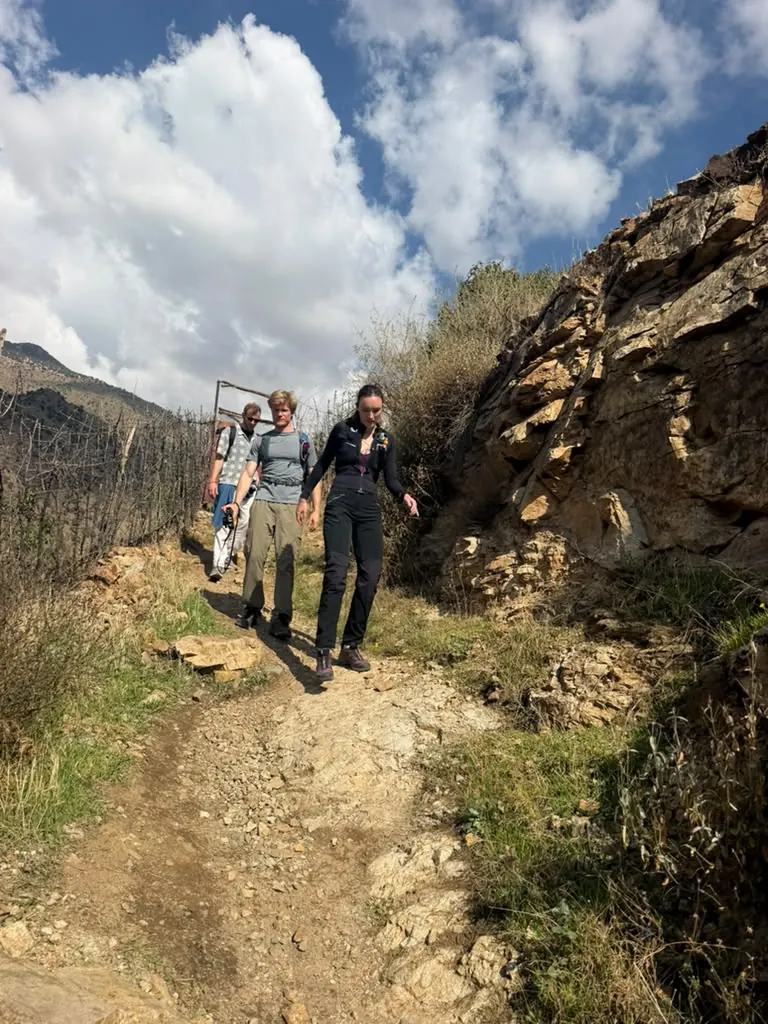
Prefer quiet waterfalls? Berber villages and back paths with me
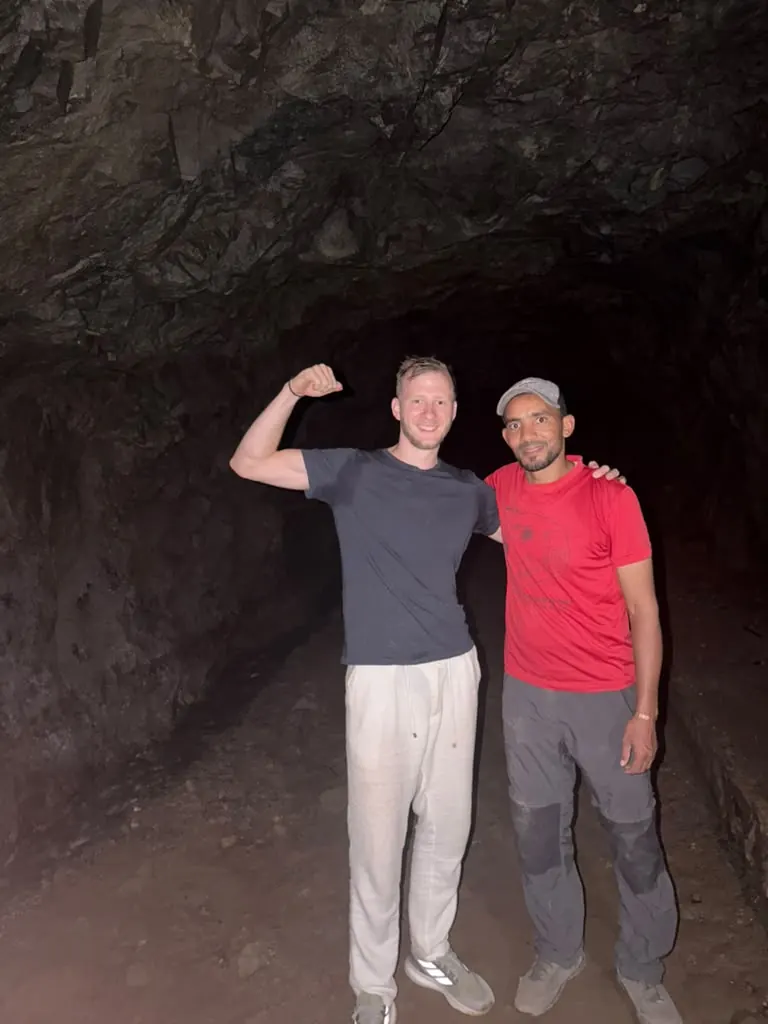
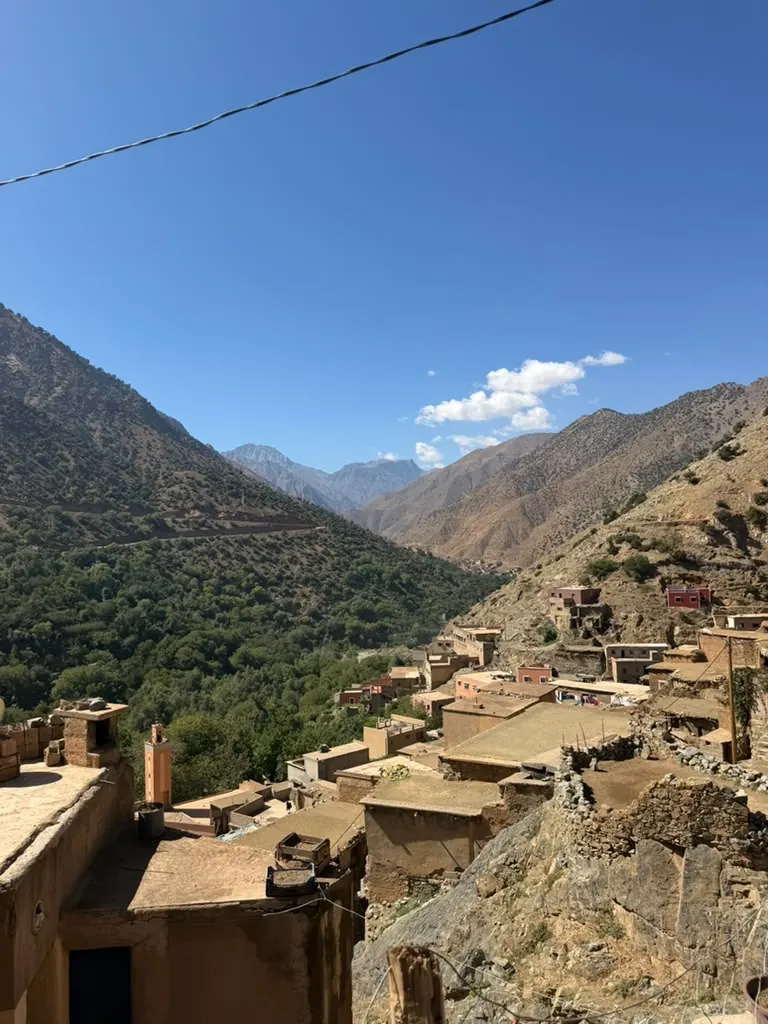
Don't like queuing on wet rock? This valley has other waterfalls. My Hidden Waterfalls walk takes about 4 hours on back paths to quieter cascades. We agree the start point when you book, and I can tell you on WhatsApp how hard it is. For more than waterfalls in one walk, take Villages, Caves & Waterfalls: about 5 hours, moderate, private or shared. We start at the bridge near the Maison du Meunier Berbère, a Berber miller's house on the valley road a little before Setti Fatma. Pickup is not included: you make your own way there, about an hour by car from Marrakech. No car or driver? Ask me when you book and I can help organise transport. We walk through an Amazigh village, climb into dry hills that look like desert, explore a cave, see the waterfalls and walk back to the miller's house. A recent group met goats, villagers, one bat who did not want visitors and beetles so big you could put a saddle on them. Lots of laughing, too. Routes and difficulty are in my Ourika Valley hike guide, and the rest of the valley is in my honest list of things to do in the Ourika Valley.
Tell me what you like (waterfalls, goats, caves or just tea), and I'll tell you which walk fits, even if the honest answer is "go to Setti Fatma alone on a Tuesday morning". Send me a message on WhatsApp, call me on +212 625 015 514, or see all my tours.
What it costs: the price depends on how long the hike is. A shared hike is 200–300 MAD per person (about €18–28). If you're on your own or a couple, I match you with other walkers on the same day. A private hike is 400–600 MAD for your whole group (about €37–55), so for two or more people, private costs the same as shared or less. We agree the price on WhatsApp before the day, and my prices are on the homepage. The price includes drinking water. Lunch, snacks, transport, any entry fees and tips are paid by you. Groups are up to 7 people.
Guests give my walks 4.9 out of 5 on average. Sterre wrote: "I felt really safe. Khalid helped me do a beautiful hike that I didn't think was possible with my fear of heights, haha!" More in the guest reviews.
FAQ
How long is the hike to the Setti Fatma waterfalls?
About 20 to 40 minutes to the first and biggest waterfall, depending on your pace and the crowd. Reaching the highest of the seven takes around 1.5 hours or more from the village. Plan roughly 3 hours for the whole walk up and back, with breaks.
Is the Setti Fatma waterfall hike difficult?
The first part is short but steep and rocky, and most people in good shoes manage it. Above the first fall it gets hard: an almost vertical climb, then wet rock, scrambling with your hands and stepping stones through the stream. Young children and people who don't like heights should stop at the first fall.
How many waterfalls are there in Setti Fatma?
Seven. The lowest is the biggest and the easiest to reach, and most visitors stop there. The highest is the smallest, about an hour of scrambling beyond the viewpoint above the first fall.
Can you swim in the Ourika waterfalls?
You can take a dip, but the water is cold and the pools are small and rocky. Don't jump or dive, and stay where you can stand. Never go in when the water is brown or storm clouds are building over the mountains.
Is it safe to visit Setti Fatma in summer?
Yes, on most days, but sudden summer storms can cause flash floods. The two floods I write about here, in August 1995 and August 2025, both came in summer. Visit in the morning, stay out of the riverbed in the afternoon, and leave the water at once if it turns brown or starts rising.