Do You Need a Guide in Morocco? Marrakech, Atlas & Toubkal
 By Khalid, local Amazigh guide10 min read
Do you need a guide in Morocco? A place-by-place answer for the Marrakech medina, Atlas day hikes, Toubkal and the Ourika Valley, from a Berber guide.
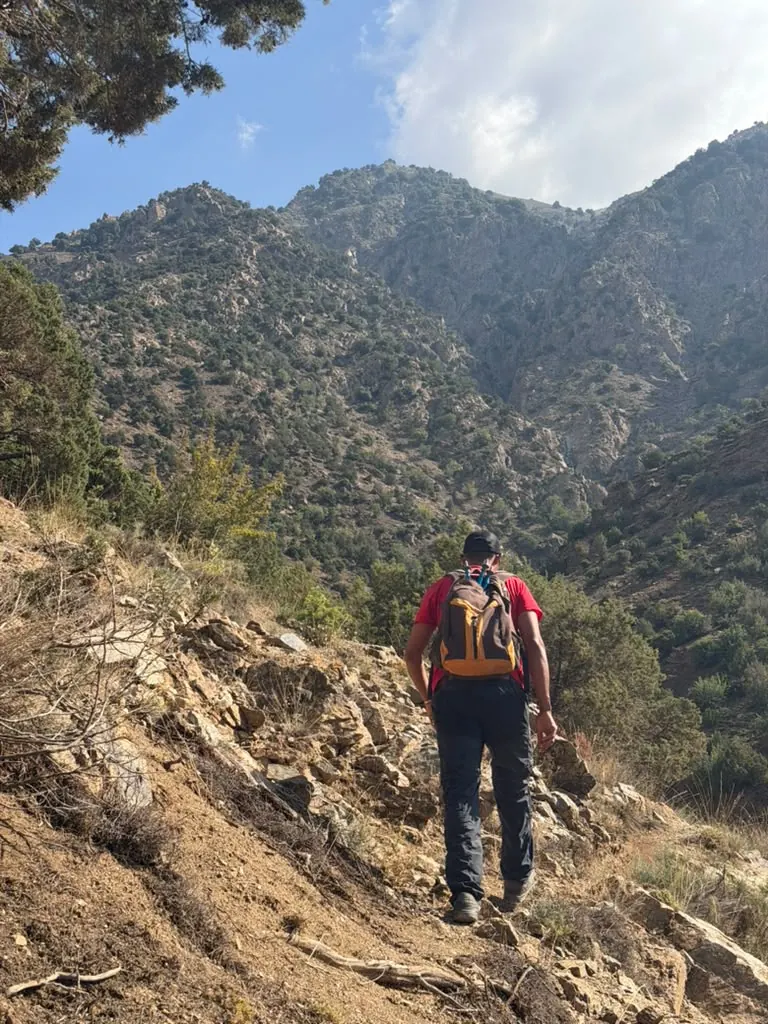
Do you need a guide in Morocco? For most of what visitors do, no. You can walk the Marrakech medina, climb to the first Setti Fatma waterfall and take short village walks around Imlil on your own. The two exceptions are the Toubkal summit, where a local guide is reportedly required and checked on the trail, and the unmarked back country of valleys like the Ourika, where a guide makes the day easier and safer.
Quick answer: Marrakech medina and the first Setti Fatma waterfall: fine alone. Ourika villages, hills and caves: a guide is a good idea. Toubkal summit (4,167 m): a local guide has reportedly been required since about 2018–2019, with passport checks on the trail.
I'm Khalid. I was born in the Ourika Valley, about an hour's drive from Marrakech. I'm Amazigh, the name we use for ourselves; outsiders often say Berber. Yes, I sell guided hikes. That's exactly why I want to tell you where you don't need me. If I lie to you about the easy places, why would you believe me about the hard ones?
Do you need a guide in Morocco? The short answer, place by place
My honest table for the places people ask me about most:
| Place | Do you need a guide? | Why |
|---|---|---|
| Marrakech medina | Optional | Easy to get lost, hard to get hurt. The problem is fake guides, not the walk. |
| Setti Fatma, first waterfall (Ourika) | Fine alone | Blue arrows, lots of people, about 20 steep minutes from the village. |
| Setti Fatma, upper waterfalls | Guide advised | Scrambling on wet rock, and the path is not always clear. |
| Ourika villages, hills and caves | Guide advised | No signs, private farmland, Tashelhit-speaking villages, river risk. |
| Imlil day walks (for example to Aroumd) | Often fine alone | Well-used mule paths. Ask in Imlil first. |
| Toubkal summit | Guide required (reportedly) | Checkpoints look at your passport and your guide. |
Do you need a guide in Marrakech? The medina vs the mountains
No, you don't need a guide in Marrakech. Lots of visitors walk the medina alone with a phone map and a sense of humour. You will get lost. Everybody does.
The real problem in the city is the fake guide: the friendly young man who says "the square is closed, follow me" and walks you to his cousin's carpet shop. The UK government's travel advice warns that people posing as official guides often harass tourists, and says a medina guide should have an official badge and permission from the local authority. A polite "la, shukran" (no, thank you) usually works.
Want a city guide for history and food? Book a licensed one through your riad, and read how to find a real local tour guide in Marrakech and spot a fake. In the medina, a guide is a comfort. In the mountains, a guide can be a safety matter.
Where a licensed guide is required: Toubkal and the Imlil checkpoints
Jbel Toubkal (4,167 metres), inside Toubkal National Park, is the highest mountain in North Africa. Most people start from Imlil, about 75 to 90 minutes by road from Marrakech, and take two days, sleeping at the refuge.
Do you need a guide for Toubkal? In practice, yes. In December 2018, two young women hiking near Imlil were killed, and the authorities tightened the rules. Since then (sources say late 2018 or 2019), trekkers and guides report that you need a local guide from Imlil to the refuge and the summit. Checkpoints on the trail, starting at Aroumd and reportedly also at Sidi Chamharouch and the refuge, check your passport and your guide's ID. Without a guide, expect to be stopped. One trekking guidebook update from 2021 also says groups of six or more need two guides.
Now the honest part. I could not find the official text of this rule published anywhere. Everything above comes from trekkers, guides and news reports, and rules can change. So ask at the bureau des guides in Imlil (the guides' office) or at your guesthouse, and arrange your guide before the day, not with whoever is waiting on the trail. If you searched in French, "Toubkal guide obligatoire": oui, in practice it is.
One more honest thing: my mountains are the Ourika Valley. For the Toubkal summit, go with a guide from Imlil who walks it every week.
Atlas day hikes near Marrakech you can do on your own
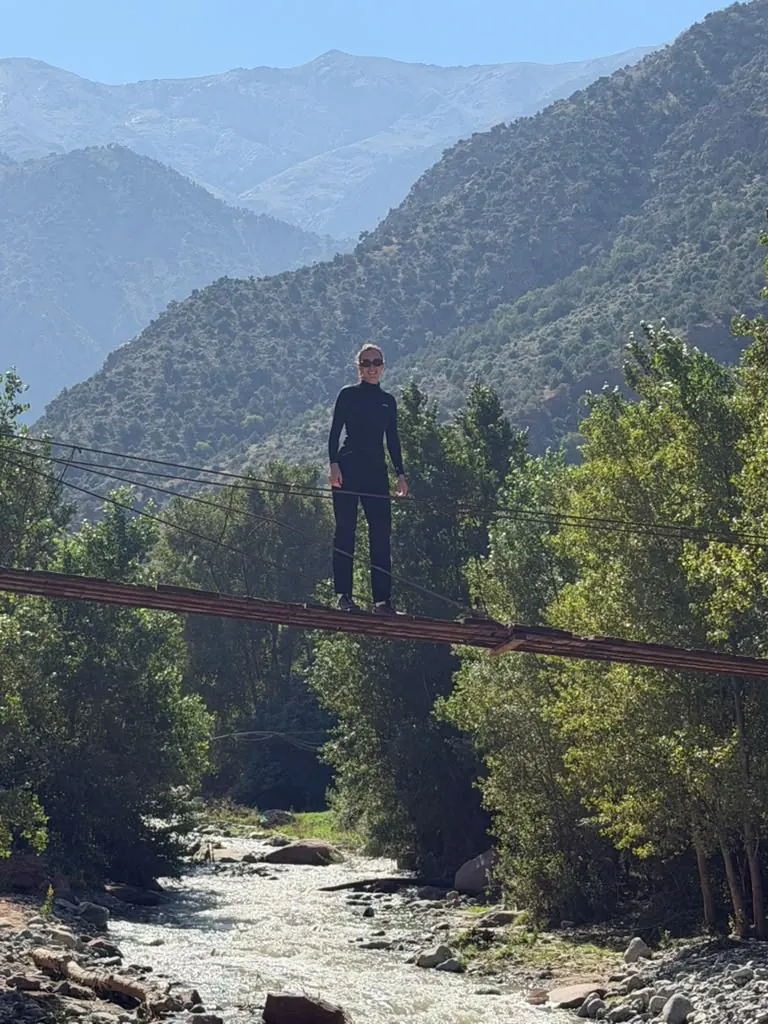
Can you hike in the Atlas Mountains without a guide? Yes, on some routes. To be fair, the UK government's travel advice for hiking in the Atlas says to hire a professional guide. My view is a little softer: on busy routes you can go alone. But know this first: our paths are not painted with red and white stripes like in the Alps. Most were made by goats, mules and grandmothers carrying firewood. They split, join again and disappear into fields.
Two walks I think are fine for a confident walker alone:
- Setti Fatma's first waterfall in the Ourika Valley: blue arrows, plenty of people, cafés along the river.
- Imlil to Aroumd, a few kilometres up the valley on a well-used path. Aroumd is also where the Toubkal checkpoints begin, so ask in Imlil before you set off whether a day walk without a guide is still fine. Imlil was among the places hit hardest by the 2023 earthquake, so ask about path conditions too.
A trek in the Atlas without a guide (sans guide, for my French readers) is possible, as long as you pick busy routes. For more ideas, with times and difficulty, see my list of the best hikes near Marrakech.
The Ourika Valley without a guide: first waterfall yes, back country less so
This is my home, so I'll be direct. You don't need a guide for the first waterfall at Setti Fatma. Men in the village will offer to take you, and travel guides report prices around 100–150 MAD, but prices change, so agree yours before you start. Wikivoyage calls it "not really necessary", and I agree. Smile, say no thank you, follow the blue arrows.
The upper waterfalls are different: wet rock and scrambling. If you go higher, ask in the village or at your riad for a known local guide, and agree the price first.
The back country is where things change: the hillside villages, the dry hills above the river, the caves. No signs, no arrows, many small paths. The full answer, with what Setti Fatma guides charge and how to say no politely, is in Ourika Valley without a guide.
Where going alone gets hard
Unmarked paths
Offline maps show some of our paths, not all of them. A path that looks fine on your phone can end at a drop, or in the middle of somebody's field.
Villages and private land
Those green terraces are not a park. They are farms. The small water channels between them, the seguia, are shared by families and easy to damage. A local knows which path is public and which crosses a family's land.
Language
In the villages we speak Tashelhit, one of the Amazigh languages. Many people also speak Moroccan Arabic, some French, and fewer English, especially older people. Asking the way with hand signs works, but slowly.
Weather and flash floods
The river is the real danger here, not people. On 17 August 1995 a sudden storm sent a flash flood down the Ourika, and more than 200 people died or went missing. In early August 2025 another flash flood damaged riverside cafés; no injuries were reported. The UK government also warns of flash floods in the mountains and near rivers in winter. A storm can be far up the valley while the sun shines where you stand.
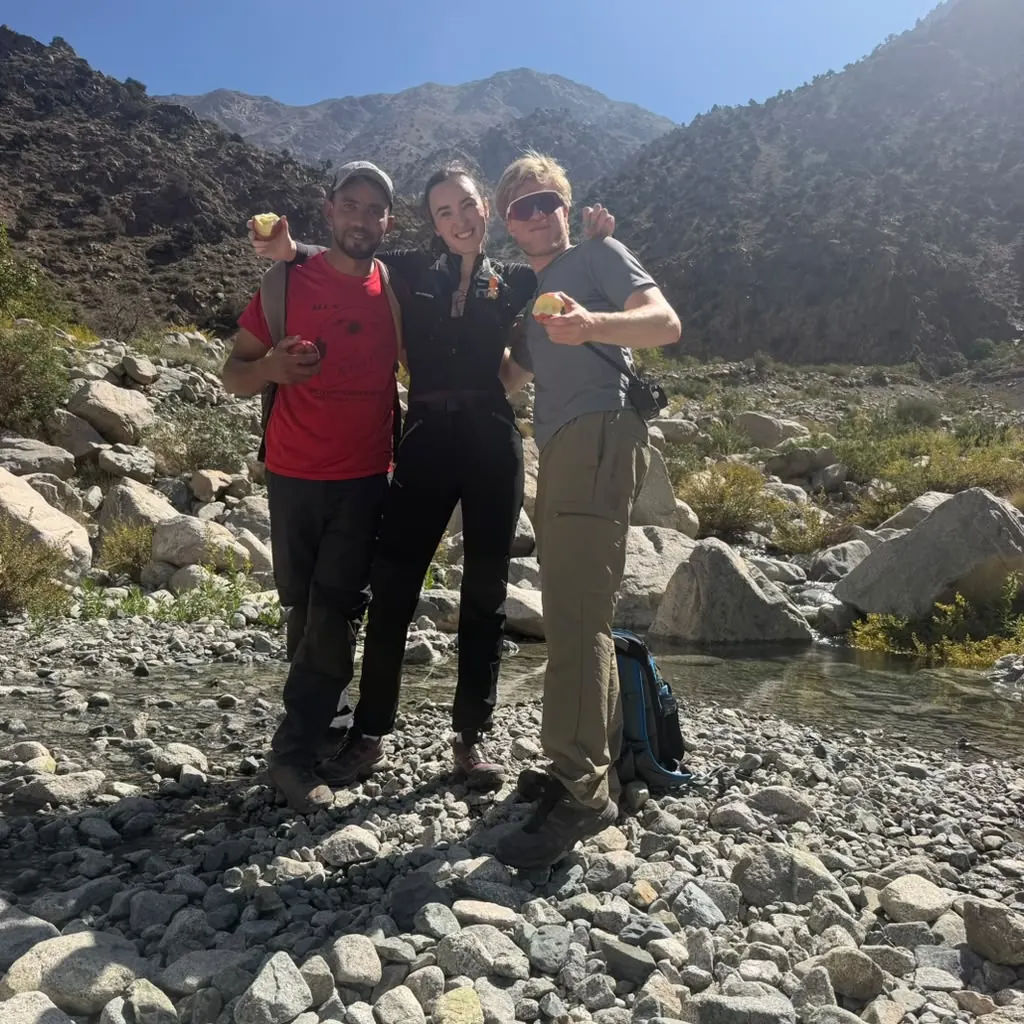
Is it safe to hike the Atlas Mountains?
Mostly, yes. The everyday problems are small: pushy touts, fake guides, a price that changes after the walk. On the trail, heat, loose stones and the river are bigger risks than people. The 2018 case above is real, it's the reason for the Toubkal checkpoints, and I won't pretend it didn't happen.
Solo and women travellers. The UK government says women may get unwanted attention in Morocco, especially when travelling alone, and suggests loose clothing that covers arms, legs and chest. If you travel alone, you don't have to hike alone: on my shared hikes I match solo travellers and couples with other people walking on the same day. If you have questions before you book, ask me on WhatsApp.
The river in summer storms. If clouds build over the peaks, or the water turns brown or gets louder, leave the riverbed and climb the bank. Never cross rising water.
Cold. It's cooler up here than in Marrakech, and in winter the high passes get snow.
What a local guide actually adds (beyond not getting lost)
Not getting lost is the smallest part:
- Doors open. Families here know me. A "salam" from me can start a real conversation instead of a photo from the path.
- Tashelhit. It's my mother tongue, so you hear the jokes, not just the translation. I also speak Arabic, French and English, a little German, and the bad words of every language my guests teach me.
- Reading the river. I watch the forecast and change the route or the date when storms are coming.
- The things you'd walk past. A cave entrance looks like a shadow in the rock until someone shows you.
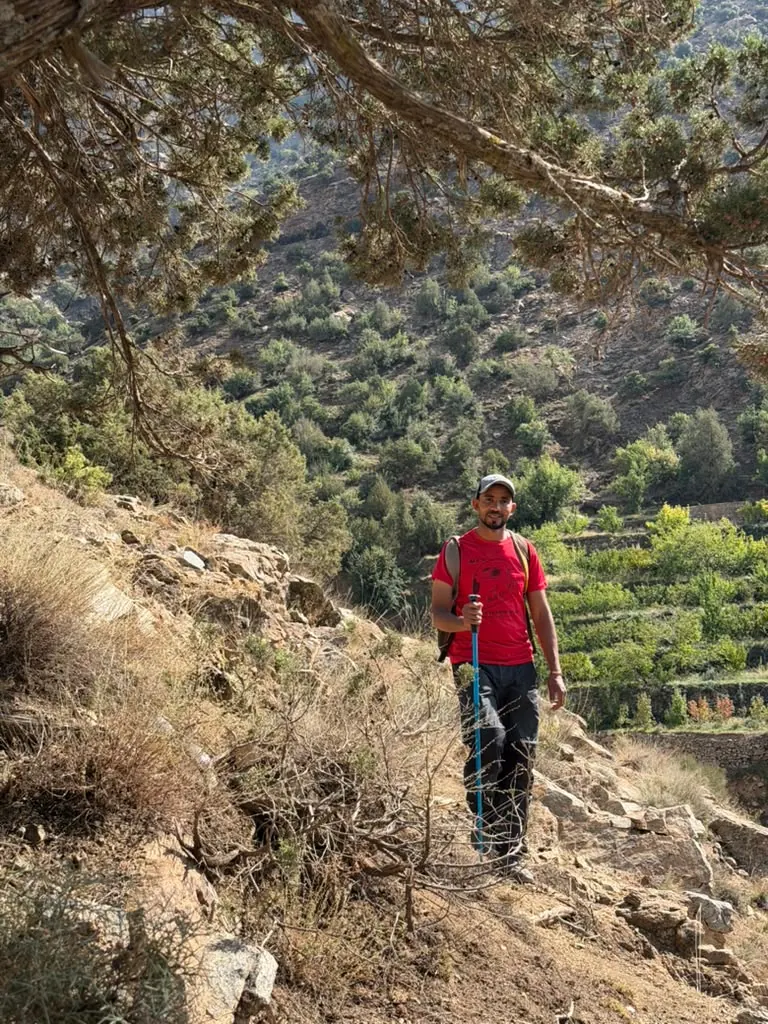
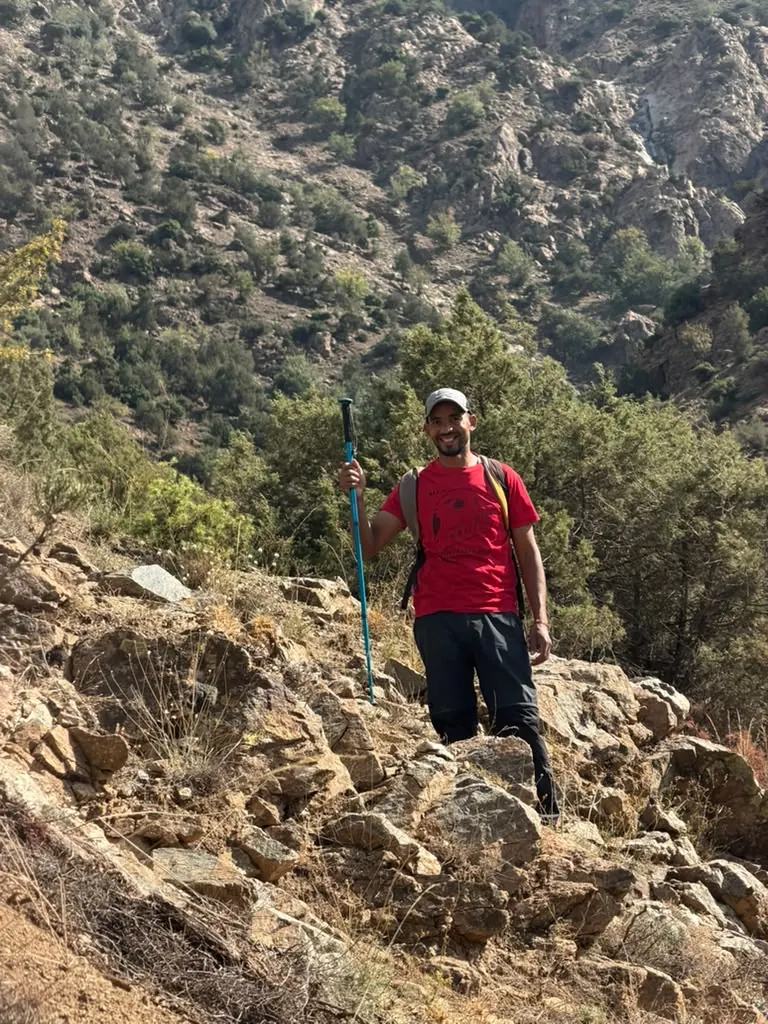
A recent group walked with me from the bridge near the Berber miller's house, up through a village and into the dry, almost desert-like hills. Goats watched us. Villagers said hello. Then we went into a cave, where a bat came out to see who was visiting and we found beetles big enough to deserve their own names. We laughed most of the day. You don't find that day on an app.
One guest, Sterre, wrote afterwards: "I felt really safe. Khalid helped me do a beautiful hike that I didn't think was possible with my fear of heights, haha!"
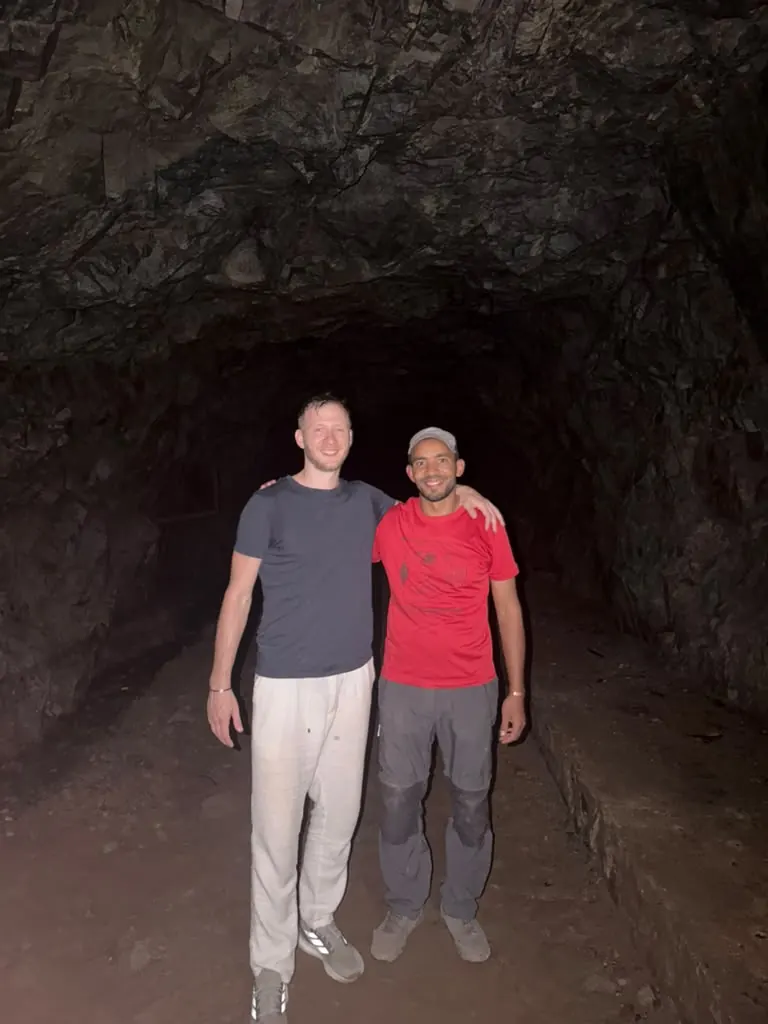
To see what a full guided day looks like, read my honest guide to an Atlas Mountains hike from Marrakech.
Going without a guide? A local's safety checklist
If you go alone, good. Just go prepared:
- Download an offline map (Organic Maps or maps.me) and your route. Phone signal can drop in deep valleys.
- Tell your riad where you're going and when you'll be back.
- Start early. You want spare daylight, and summer afternoons are hot.
- Carry 1.5–2 litres of water, snacks, a sun hat and sunscreen.
- Wear closed shoes with good grip. Sandals lose against our rocks.
- Pack a warm layer and some cash in small notes.
- Cover shoulders and knees in villages, and ask before you photograph people.
- Stay out of riverbeds when clouds build.
- Save the emergency numbers. The UK government lists 177 for the gendarmerie (the police in rural areas), 190 for the police and 150 for an ambulance.
- Turn back early if something feels wrong. The mountain will wait.
If you do hire one: how to find a real guide and what to tip
As the Moroccan press describes the guide law, there are licensed guides for cities and tourist circuits, and separate ones for natural areas like mountains. But many village mountain guides work on local reputation, not a licence card. I'm one of them: I have no official licence, but people in my village and across the valley know me as a guide. So the better checks are real reviews, a recommendation from locals or your riad, a guide who is known in the villages, and a fixed price agreed on WhatsApp before the day. Agree the route, the price (per person or per group?) and what's included before you start. My page on finding a local tour guide in Marrakech has the full checklist.
Tipping is normal here but never required. A common guideline in 2026 is around 100 MAD per person for a half day, or roughly 200–300 MAD for the whole group. Details are in how much to tip a tour guide in Morocco.
An honest note: I guide the Ourika Valley
Toubkal belongs to the Imlil guides, and they know it better than me. The Ourika Valley is my home. If you decide you want a local for the back country, my Villages, Caves & Waterfalls hike is 5 hours, moderate, and private or shared. We start at the bridge near the Maison du Meunier Berbère, walk up the valley to a Berber village and into the dry hills, go into a cave, then follow the water to the falls and finish back at the Maison du Meunier Berbère.
The price depends on the length of the hike. A shared hike is 200–300 MAD per person (about €18–28); a private hike is 400–600 MAD for your whole group (about €37–55), so for two or more people, private costs the same or less. Drinking water is included; lunch, snacks, transport and tips are not. Groups are up to 7 people. Pickup is not included: you make your own way to the bridge (map), about an hour by car from Marrakech. No car or driver? Ask when you book and I can help organise transport. Book with me on WhatsApp or by phone (+212 625 015 514), and we agree the price before the day.
Not sure you need a guide? Ask me, I'll tell you honestly, even if the answer is "go alone". Message Khalid on WhatsApp
FAQ
Do you need a guide to hike in Morocco?
Not for every hike. Busy routes like the first Setti Fatma waterfall and short walks around Imlil are fine alone with an offline map. For Toubkal, a local guide is reportedly required and checked. For unmarked back country like the Ourika villages and hills, a local guide is strongly advised.
Can you climb Toubkal without a guide?
In practice, no. Since about late 2018 or 2019, trekkers report checkpoints between Imlil and the summit, where officers check your passport and your guide's ID. I couldn't find an official published text, so confirm the current rule at the bureau des guides in Imlil.
Is it safe to hike the Atlas Mountains?
Mostly, yes. The common problems are touts and fake guides; on the trail the bigger risks are heat, loose rock and the river. Stay out of riverbeds when storms build, tell someone your plan and start early.
Do you need a guide in Marrakech?
No. You can explore the medina alone, and getting lost once is normal. For history or food, book a licensed guide through your riad, and ignore people in the street who offer to show you the way.
Can you visit the Ourika Valley without a guide?
Yes, if you only want the first waterfall at Setti Fatma: about 20 steep minutes from the village, with blue arrows. For the upper falls, the hill villages and the caves, a local guide makes it safer and much more interesting.